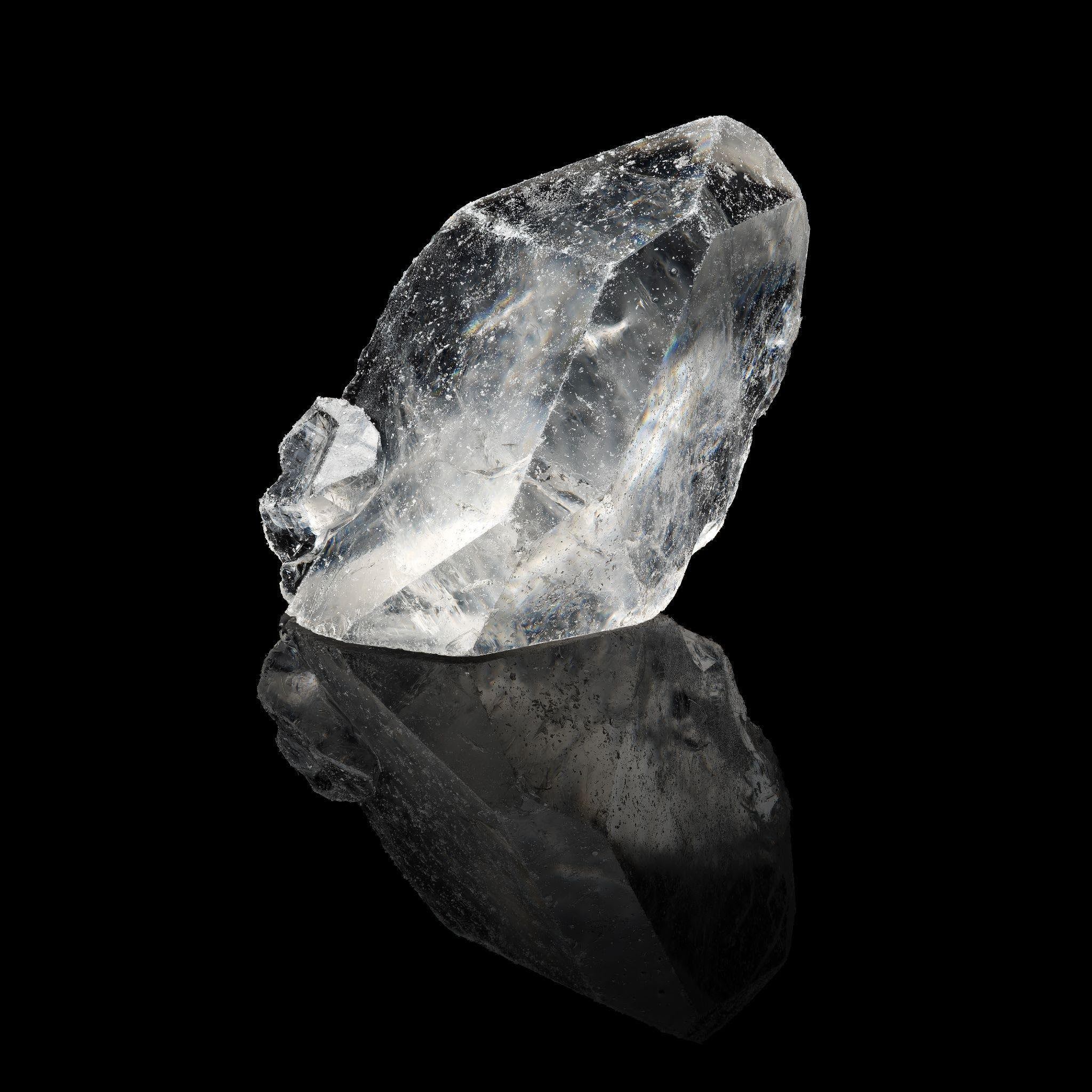
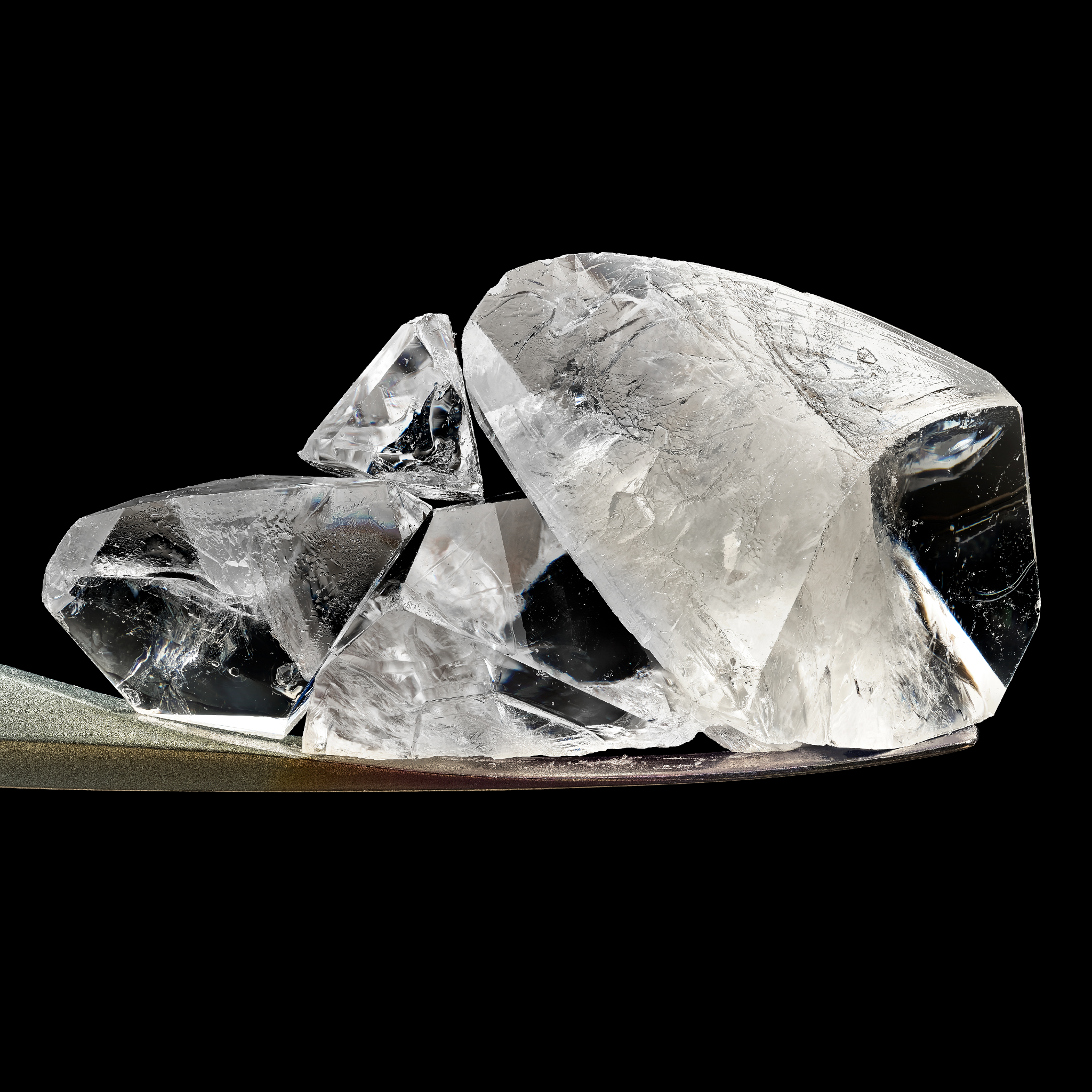
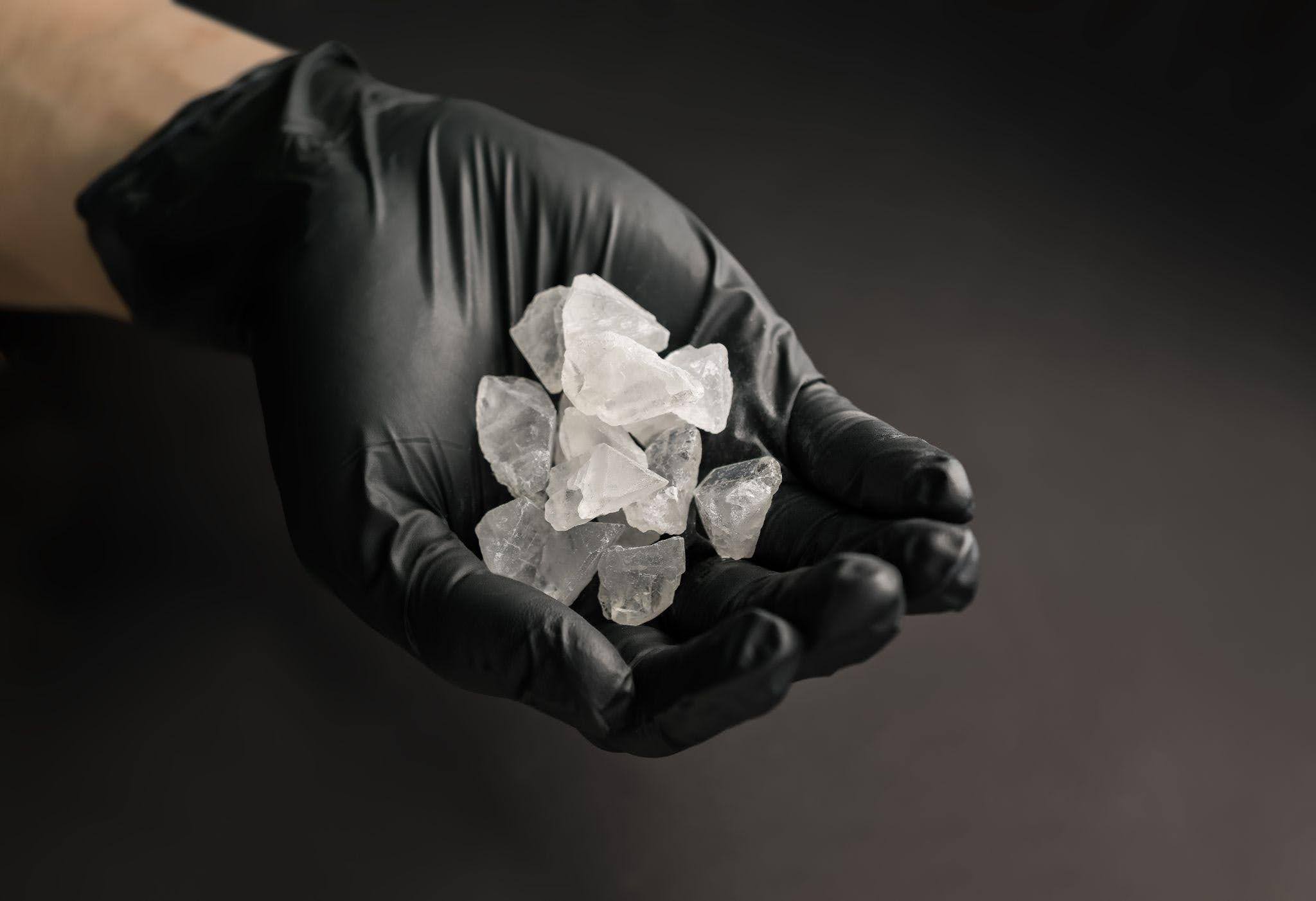
Every jar of THC diamonds tells a story. One written in supersaturation, nucleation events, and the thermodynamic tug-of-war that determines whether your THCa ends up as chalky crumble, delicate micro-diamonds, or the kind of massive gems you may see posted on social media.
Most of what gets written about concentrate formats stays at the surface. It describes what things look like, what they taste like, and maybe how to dab them. That’s useful, but it skips the nuance of products, formulation, and final consistency, leaving consumers with more questions than answers. Why does THCa crystallize the way it does, and what variables are we actually controlling when we run a separation?
After more than a decade of hands-on extraction work at Dabstract, we’ve seen the cannabis industry evolve from its earliest, most experimental stages into something far more sophisticated. Yet for all the progress, the industry’s understanding of the physical chemistry behind crystalline concentrate production remains underdeveloped. That’s a gap worth closing.
Crystallization by Jerry Duzcak, Photographed by Devin Stein. Photo courtesy of UCG Inc. All Rights Reserved.
So let’s get into it.
What THCa Actually Is—And Why It Wants to Crystallize
THCa is the acidic precursor to THC found in raw cannabis flower. THCa readily forms ordered crystalline lattices when conditions allow. The key is its carboxylic acid group. This group acts as a strong hydrogen bond donor and acceptor, letting neighboring molecules lock into a repeating, stable pattern.
Other cannabinoids like Delta-9 THC lack that acidic group, so they have fewer anchor points for orderly bonding. Their molecules pack loosely, which is why Delta-9 THC typically settles into a viscous, amorphous resin rather than a solid crystal. Many other cannabinoids also exist as complex mixtures of closely related compounds, and those impurities disrupt lattice formation.
Rock Candy, THCa, and the Same Basic Science
Before going deeper into the chemistry, it helps to have a reference point. Think about how rock candy is made.
You dissolve sugar into hot water—far more than the water could hold at room temperature. When that solution cools slowly, and you introduce a wooden stick or a seed crystal as a starting point, the sugar has nowhere to go but out of solution. It begins stacking onto that seed, molecule by molecule, building the large, faceted sugar crystals that are unmistakably “rock candy.”
Speed up the cooling, skip the seed crystal, or disturb the jar, and you get a mess—small, irregular crystals forming everywhere at once, competing for the same dissolved sugar, never growing large.
THCa crystallization in a non-polar solvent matrix works in the same way. Instead of sugar dissolved in water, you have THCa dissolved in butane or propane. Instead of cooling water to drop below the saturation point, you’re slowly evaporating solvent to concentrate the THCa until it has no choice but to begin forming solid crystals. The same core crystallization principles—supersaturation, nucleation, and crystal growth—govern both processes. The molecule and solvent are different, but the same core thermodynamic principles apply.
Supersaturation and Nucleation: The Starting Gun
Crystallization does not begin the moment a solution is saturated. It begins when that solution becomes supersaturated—carrying more dissolved solute than thermodynamic equilibrium would ordinarily permit—and when the first stable molecular cluster, called a nucleus, forms and begins to grow.
This distinction between saturation and supersaturation is critical. A saturated THCa solution in butane is near equilibrium, so there is little thermodynamic driving force for sustained crystal growth. A supersaturated solution is in a metastable state. It’s primed. And the transition from metastable solution to growing crystal depends on nucleation.
Going back to the rock candy analogy: the moment your oversaturated sugar water starts to cool, the solution is looking for any excuse to dump its excess sugar into solid form. A scratch on the jar, a speck of dust, the rough surface of the wooden stick—any of these gives the sugar molecules a place to begin stacking. The same thing happens with THCa in a non-polar solvent matrix.
There are two types of nucleation relevant to THCa separation:
Homogeneous nucleation occurs spontaneously within the bulk solution when random molecular collisions produce a cluster large enough that continued growth becomes thermodynamically favorable—a “critical nucleus.” Below a certain size, the energetic cost of creating a new surface area (surface free energy) outweighs the energetic benefit of forming a stable lattice (volume free energy). Once a cluster exceeds the critical nucleus size, it becomes thermodynamically favorable for it to grow rather than dissolve back into solution.
Heterogeneous nucleation occurs when a foreign surface—a container wall, a particulate, even a scratch in glassware—provides a lower-energy site for nucleation to begin. This is why closed-loop vessels and vessel cleanliness matter more than most people appreciate. Uncontrolled heterogeneous nucleation sites produce unpredictable crystal initiation.
In practice, THCa separation in a “diamond miner” or sealed vessel operates by creating a controlled supersaturation gradient. The fresh extract is placed under mild positive pressure, which helps keep the non-polar solvent in the liquid phase and can delay widespread nucleation long enough for conditions to stabilize. As the solvent vapor is slowly bled off, the THCa concentration in solution climbs deeper into supersaturation until nucleation becomes inevitable.
The slower and more controlled this process, the fewer nucleation events occur—and fewer nuclei mean each one has access to more dissolved THCa as it grows. The result: larger crystals. Rapid, uncontrolled nucleation produces many small crystals competing for the same pool of available solute. The result: fine sugar or crumble.
This is classical crystallization theory, and it applies to THCa exactly as it applies to rock candy, salts, and mineral systems.
Crystallization by Jerry Duzcak, Photographed by Devin Stein. Photo courtesy of UCG Inc. All Rights Reserved.
The Role of Non-Polar Solvents in Crystal Quality
Solvent choice is one of the primary variables governing what your final crystal looks like—not a background detail.
Non-polar solvents like butane (n-butane or isobutane) and propane dissolve THCa readily at low temperatures and can be removed from the extract with relatively precise control over evaporation rate. That evaporation control is everything. The solvent is not just a delivery vehicle; it is the medium in which crystallization occurs, and its behavior during removal determines the supersaturation curve the THCa experiences.
Butane, for example, has a relatively low boiling point (approximately −1°C at atmospheric pressure). In a closed, pressure-controlled environment, you can fine-tune how quickly butane leaves the system by managing pressure and temperature—essentially controlling the speed at which THCa concentration rises in the remaining solution. Slow bleed-off keeps the solution in the early stages of supersaturation for longer, allowing fewer, larger nuclei to form and grow. Rapid solvent removal drives the system into deep supersaturation quickly, triggering a nucleation avalanche that produces many small crystals.
Propane, with an even lower boiling point (approximately −42°C), tends to be more aggressive in its extraction and evaporation behavior. Butane/propane blends allow extractors to tune solvent behavior—especially boiling characteristics, extraction selectivity, and evaporation behavior—to influence downstream crystallization outcomes.
The purity of the solvent also matters. Trace polar impurities or contamination in a nominally non-polar solvent can disrupt the crystallization environment by altering the solubility of THCa in unpredictable ways, producing inconsistent results from batch to batch.
The Variables That Drive Crystal Outcomes
So what are the practical levers that determine what your final crystal looks like? They are the same variables that govern your non-polar solvent system: temperature stability, evaporation rate, pressure, and solvent composition.
Temperature Stability
Lower, stable temperatures favor slower nucleation and the growth of larger, more ordered crystal forms. Temperature swings do the opposite—triggering secondary nucleation events or causing crystal morphology to shift mid-process.
At Dabstract, even small ambient swings during separation can redirect a batch toward a different morphology—which is why temperature control is critical.
Solvent Evaporation Rate
Rapid evaporation drives the solution into deep supersaturation quickly, triggering fast nucleation and fine crystal morphology. Slow, controlled evaporation does the opposite—letting the system approach equilibrium gradually and favoring larger, more stable crystal growth.
Think of rock candy: slow cooling over days yields large, beautiful crystals; rapid cooling yields a grainy mess. Solvent removal speed works the same way.
Pressure Management
Positive pressure helps suppress premature solvent boiling and can extend the window before widespread nucleation begins—giving fewer, larger crystals a better chance to form rather than triggering a simultaneous avalanche of nucleation events.
It is one of the primary engineering variables that distinguishes professional separation from inconsistent results.
Solvent Composition and Residual Solvent Levels
Solvent choice directly affects THCa’s solubility limit. Butane, propane, and butane/propane blends each carry THCa differently—meaning the same starting concentration can land at very different points on the supersaturation curve depending on which solvent, and in what ratio, is present as evaporation proceeds.
Residual solvent levels matter too—more solvent means lower effective THCa concentration, extending the nucleation induction window and favoring larger crystal growth. Too little, and that window closes entirely.
What This Means in Practice: Reading a Crystal
Understanding the chemistry behind THCa crystallization gives you the ability to read a finished product diagnostically. While morphology is never explained by a single variable alone, it reflects the balance of nucleation rate, solvent behavior, temperature control, and pressure management during separation.
Fine granular micro-diamonds indicate faster nucleation, higher nucleation density, and more rapid solvent evaporation. Still genuinely crystalline THCa—but with a different growth history driven by faster kinetics.
Chalky or powdery crumble-like THCa often indicates rapid, uncontrolled nucleation under thermodynamically unfavorable conditions—temperature fluctuation, aggressive solvent removal, or loss of pressure control during the critical early phase of crystallization.
None of these outcomes is simply random. Every texture is a record of the conditions that produced it. Just like with rock candy, the process writes itself into the product.
Crystallization by Jerry Duzcak, Photographed by Devin Stein. Photo courtesy of UCG Inc. All Rights Reserved.
The Bottom Line
The difference between chalky crumble and a jar of massive, luminous THCa gems is not luck, and it is not magic. It is the expected outcome of supersaturation depth, nucleation kinetics, non-polar solvent evaporation rate, temperature stability, and pressure management—variables that can be understood, controlled, and optimized when you engage with the underlying science.
The rock candy analogy is not just a teaching tool. It is a practical example of the same thermodynamic principles that govern every THCa crystallization run. If you can grasp why undisturbed, slow cooling produces the best rock candy, you already understand the core logic of diamond production.
The concentrate industry has spent years developing phenomenal empirical intuition about what works. The next step is building the scientific framework that explains why it works—and using that framework to do things that haven’t been done yet.
About the Author
Dylan Thiel is the Co-Founder and Chief Technology Officer of Dabstract. He oversees operations, brand expansion, and product innovation across the brand. With over a decade of experience in cannabis extraction and product development, he continues to drive advancement in extraction techniques and quality standards across the industry.
Subscribe to Fat Nugs Magazine!
Love this article? Show your support for Fat Nugs with a magazine subscription!
As a fully independent media organization, Fat Nugs relies on the grassroots support of individuals like you to continue to write and share these articles. Every subscription helps us keep bringing you the unbiased, broad-ranging cannabis, hemp, and psychedelics articles like these.
Polymorphs of Delta-9-THC Naphthoyl Ester — International Patent Publication No. WO 2021/076633 A1, 2021. (Documents eight distinct crystal forms of a THC derivative).
Cannabinoid Crystal Polymorphism — Journal of Cannabis Research, 2022. (Peer-reviewed commentary on cannabinoid polymorph evidence and lattice disruption by impurities).
Solid-State NMR Analysis of Nabilone Polymorphs — Journal of Pharmaceutical Sciences, 1985. (Early characterization of crystal polymorphism and morphology shifts in a cannabinoid-framework compound).
Principles of Crystal Nucleation and Growth — De Yoreo, J. J., & Vekilov, P. G., Reviews in Mineralogy and Geochemistry, 2003. (Theoretical foundations of classical nucleation theory, critical nucleus size, and surface vs. volume free energy).
Thermophysical Properties of Fluid Systems: Butane — NIST Chemistry WebBook, SRD 69, National Institute of Standards and Technology. (Standard reference data for boiling point and phase equilibria of n-butane).
Thermophysical Properties of Fluid Systems: Propane — NIST Chemistry WebBook, SRD 69, National Institute of Standards and Technology. (Standard reference data for boiling point and phase equilibria of propane).