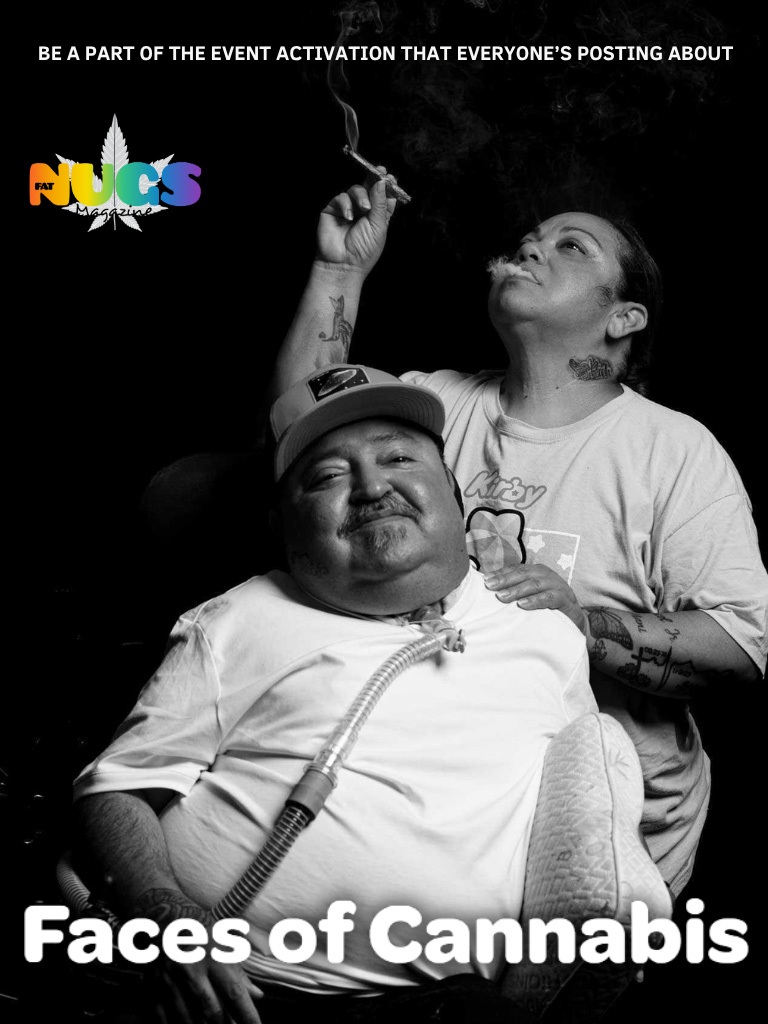
How much does your medical team know about cannabis?
That’s the question Mike Robinson has been asking himself, and the question he now wants to take public.
What Does Your Doctor Know About Cannabis?
Robinson is taking medical cannabis research into his own hands. The 5-time cancer and stroke survivor spends a lot of time in medical offices as a patient and a volunteer. He also has a deep knowledge of cannabinoids. He decided to combine these and start grilling his medical teams on their knowledge of cannabis in hopes of helping expand their minds.
Robinson developed a questionnaire to assess two simple things: whether medical professionals were aware of the change of cannabis to a Schedule III substance, and if they had any awareness of the proven medical benefits of the plant. Now, he’s taking his survey online and into the hands of medical professionals worldwide, thanks to the help of web developer Creaeza and the Global Cannabis Research Center.
The question-based study, titled “Survey Study for Clinicians and Healthcare: U.S. Schedule III and Plant Medicine” is live and accepting submissions. Robinson encourages medical professionals to share it with friends and colleagues in hopes of gathering as much self-reported data as possible. It will be live and gathering responses through March 1, 2027
Online Survey Seeks to Gauge Physician Knowledge
Robinson is more than a cannabis lover. He is reverent in his praise of the plant and relentless in his desire to advance cannabis science. That’s why he’s spent the last six months talking to 298 people employed in the medical space.
At this point, he said, practically everyone employed by Cottage Health Care in Santa Barbara has taken this survey. What he’s found highlights a simple truth: medical professionals don’t know enough about cannabis.
He wants to change that. To do that, he needs to prove there is a substantial gap. That’s why he embarked on these partnerships to expand the reach of this survey, because he is, in his own words, “a biased party.” To get research considered for publication, it must be conducted by a “non-biased third-party data collector.” That’s where his partnership with the Global Cannabis Research Center and Creaeza comes in. The developers created a website to host the survey and collect responses, separate from Robinson.
Once the data collection is over, Robinson then wants to submit the findings for publication to help medical professionals better understand the gaps in their own knowledge.
This type of research, though considered informal, is another example of consumer-based research expanding knowledge in the cannabis industry. When traditional research methods are slow to catch up, people take matters into their own hands.
What Does Your Doctor Know About Cannabis? The Gap Between Patients and Practitioners
There is a gap between medical marijuana patients and doctors.
A 2021 survey of 275 medical patients in Michigan in the Journal of Cannabis Research found that:
A mere 18% of respondents felt their primary care provider had “good or excellent” knowledge of medical cannabis.
86% had substituted medical marijuana for pharmaceuticals
134 people felt their providers were unaware of this substitution
In theory, physicians generally agree with expanded cannabis access, per a 2024 survey published in the Journal of the American Medical Association, which found that 59% of surveyed physicians support federal legalization for medical access. But in practice, many doctors fall short of truly understanding how cannabis works in the body. (This is where I remind you that the endocannabinoid system is still not part of medical school curriculum in 2026.)
A 2021 survey of 167 cannabis consumers found that only 26% of respondents trusted their doctor to provide accurate information on medical cannabis.
This gap is dangerous because cannabis is a bioactive substance – it interacts with the body on a chemical, cellular level – like all medications. And like all medications, there can be interactions between cannabis and other substances or pharmaceuticals that patients need to know about. Failure to disclose cannabis consumption can put patients at risk of medical interactions, while continued bias from medical professionals perpetuates consuming in silence.
That’s exactly what Robinson wants to change. This survey is the first step.
Subscribe to Fat Nugs Magazine!
Love this article? Show your support for Fat Nugs with a magazine subscription!
As a fully independent media organization, Fat Nugs relies on the grassroots support of individuals like you to continue to write and share these articles. Every subscription helps us keep bringing you the unbiased, broad-ranging cannabis, hemp, and psychedelics articles like these.