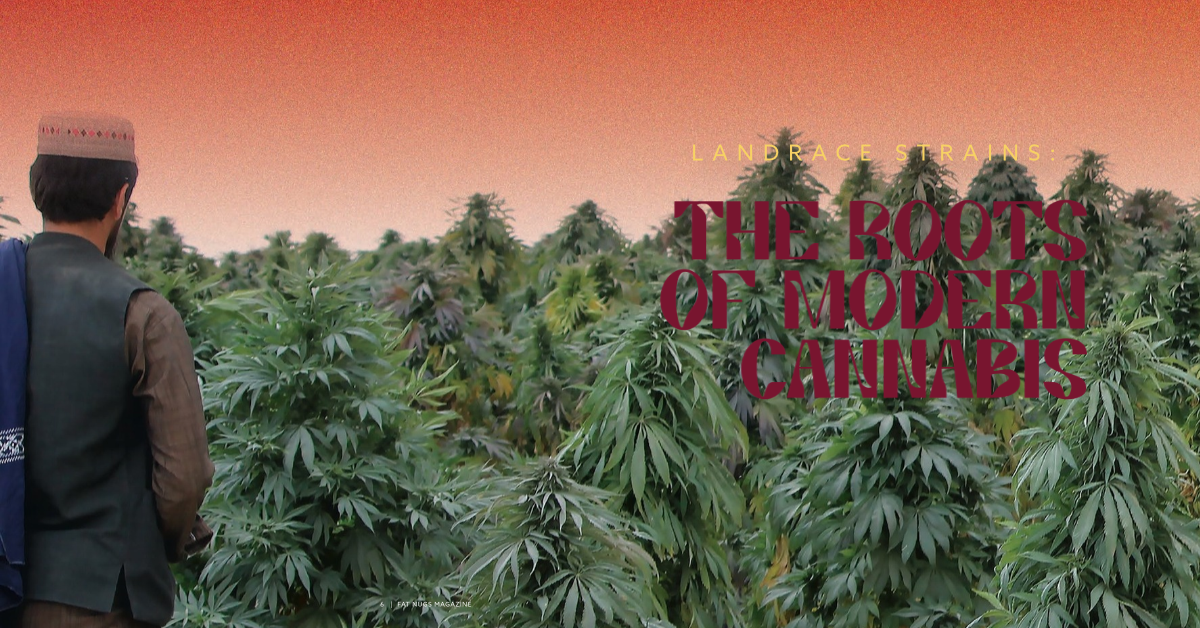
Landrace Strains: The Roots of Modern Cannabis

This article was first published in the Landrace edition of Fat Nugs Magazine, shared in April 2026. 

Few words in cannabis culture hold as much mystique and confusion as landrace. For decades, breeders and aficionados have used this term to describe strains related to authentic origins and pure heritage. Understanding what “landrace” really means helps preserve the plant’s history and save the genetic diversity that modern breeding often overlooks.

What Are Landrace Cannabis Strains?

A landrace cannabis strain is a naturally occurring variety that has adapted over generations to the specific climate, soil, and environmental conditions of a geographic region. Unlike modern hybrids, landraces were shaped by isolation and natural selection rather than calculated human breeding.

These strains typically evolved in regions where cannabis has been cultivated—or grown wild—for centuries: the Hindu Kush mountains, the tropics of Thailand, or Colombia and Mexico. Over time, each population developed unique traits—growth habits, flowering times, terpene profiles, and cannabinoid ratios that helped them flourish in local conditions.

A true landrace is both regionally distinct and genetically stable, retaining the adaptations that define its origin. In short, a landrace represents nature’s own breeding experiment—a snapshot of evolution fine-tuned by time and environment.

Examples of Classic Landrace Cannabis Strains

Many of the world’s most famous modern strains have landrace roots. Well-documented examples include:
  • Afghani – Originating in the mountains of Afghanistan and Pakistan, Afghani strains are short, broad-leafed, and resin-rich. Afghani #1 comes to mind.
  • Thai – Thai landraces are tall, late-flowering sativas with citrusy, spicy aromas, with an unmistakable uplifting effect.
  • Malawi Gold – East African Malawi landraces are prized for their high potency, electric cerebral effects, and golden-toned buds.
  • Durban Poison – A South African landrace acclimated to subtropical climates, famous for its sweet, anise-like aroma and energetic buzz.
  • Colombian Gold – Santa Marta from the Northern Colombian mountains, is a long-flowering sativa with bright lime-green buds and classic peppery-sweet aromas
Each of these genetic lines contains evolutionary trademarks of its home environment—whether drought resistance, mold tolerance, or unique cannabinoid expressions. Breeders incorporated these traits for the foundation of thousands of modern hybrids.

Heirloom vs Landrace Strains

In today’s commercial cannabis market, the word landrace is often misused to imply exclusivity or purity. Many strains labeled “landrace” are modern hybrids with only partial ancestry from true landrace populations. Seed sellers frequently exploit the term to market products that may only contain a fraction of the original genetics or are landraces in name only.

True landraces must come from plants grown in their indigenous regions, often maintained by traditional farmers using heirloom seeds passed down through generations. When a strain like “Thai” or “Afghani” is grown elsewhere and crossbred repeatedly, it is not a landrace—it becomes an heirloom or heritage strain: genetically descended from landraces but cultivated outside their native environment.

Even experienced growers get confused when landrace genetics are diluted. The blurred distinction between wild and traditional plant populations and modern breeding stock makes tracking genetics very difficult.

Landrace Strains in the Cannabis Community

In the cannabis world, landraces have an almost mythical status. To many growers, they show a connection to the plant’s origins—before prohibition and the explosion of hybridization.

Collectors and preservationists continue to root out genuine landrace seeds from remote communities. Landrace Warden often risks his freedom to find landraces. Seed banks, breeders, and ethnobotanists have rescued some lines from extinction. Many landrace populations are endangered by modernization, eradication, and, as I witnessed in Colombia, cross-pollination with imported genetics.

Breeders and aficionados, growing landrace strains have a living link to the plant’s past—they can experience how cannabis grew before global commercialization. In forums, growers discuss landrace authenticity just like the wine or coffee world debates “terroir,” emphasizing how place and tradition shape the outcome.


Why Landraces Matter in Modern Breeding Programs

Modern cannabis is dominated by a limited range of genetics. Breeders focused mainly on maximizing THC content, yield, and bag appeal have led to genetic bottlenecking—a reduction in overall diversity. A limited gene pool often increases susceptibility to pests, diseases, and environmental stress, similar to agricultural crops like bananas and corn.

Landrace strains contain a broad range of genetic diversity brought on by environmental pressures and hold invaluable traits for breeders:
  • Pest and disease resistance. Landraces evolved with natural defenses fitted to their ecosystems.
  • Adaptability. Landraces often thrive in different climates, offering potential for breeding resilient cultivars.
  • Novell cannabinoids and terpenes. Unique chemical profiles can give new medicinal or taste properties.
  • Genetic stability. The relatively stable genomes supply a foundation to create a consistent hybrid offspring.
Breeders can expand the genetic possibilities of modern cannabis by incorporating landrace genes, potentially recovering lost aromas, flavors, and effects. This genetic diversity is not just a matter of nostalgia—it’s essential for sustainability and innovation in cannabis genetics.

Landrace Cannabis and the Quest for Diversity

Commercial cannabis today often feels homogenized: dispensaries offer seemingly endless variety, but they share very similar genetics. Most often, “new” strains are slight deviations of a few dominant cultivars. Landrace cannabis injects fresh DNA into this closed loop.

Take a look at heirloom vegetables. Old tomato varieties preserve unique colors and flavors; landrace cannabis preserves the evolutionary and cultural diversity of the species itself. Without landrace genetic reservoirs, the cannabis industry could lose the traits that help it adapt to changing climates, diseases, and consumer demands.

Preserving landrace strains means preserving the biological heritage of the plant—its evolution, its relationship to human culture, and its potential for future discovery. However you view them—historical artifacts or living libraries- landraces remain the foundation on which all cannabis diversity depends.

About the Author

Author Jorge Cervantes, founder of Marijuana Growing.com invites you to visit his sites and download the Cannabis Encyclopedia in 11 languages.

Subscribe to Fat Nugs Magazine!

Love this article? Show your support for Fat Nugs with a magazine subscription!

As a fully independent media organization, Fat Nugs relies on the grassroots support of individuals like you to continue to write and share these articles. Every subscription helps us keep bringing you the unbiased, broad-ranging cannabis, hemp, and psychedelics articles like these.

Search for Articles