Jim unearthed this delicious bit of local history, spent a decade investigating it, and published Cornbread Mafia, ending the decades-long code of silence the group had maintained. That was the start of Cornbread Hemp.
Creating a Company That Supports a Community
Cornbread Hemp launched in 2019 in Lexington, Kentucky. In 2024, they moved operations to a bigger facility in Louisville, where they currently employ 104 people.
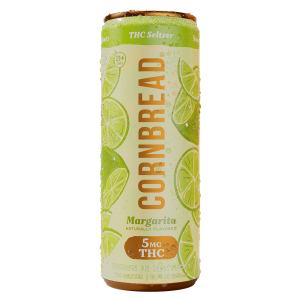
The focus on supporting his home state is obvious. Zipperle calls it “an honor” to deliver Cornbread as a “Made in Kentucky” product. He intentionally built Cornbread in the counties he grew up in, investing in his neighbors. Everything that Cornbread touches, from the hemp grown in the ground to the processing and shipping plant, is based firmly in Kentucky; a feat of domestic manufacturing rarely seen in today’s America.
The pride in Kentucky carries over to his employees. Zipperle has focused the last several years on making his company a good place to work for his neighbors. Starting wage is $20. The company covers health insurance and recently added full coverage for vision and dental. For some people on staff, that was the first time in their entire lives they had that kind of medical coverage.
“I’m proud of what we’ve built and how we treat our people,” Zipperle said. “People like making a product with a mission they can get behind. I’m really proud of the $9 million we had in payroll last year that goes to Kentucky families.
Kentucky is not known for its lax attitude about cannabis, but it is known for a premium agri-climate. Everything from award-winning racehorses to premium bourbon and
good tobacco depends on Kentucky’s unique microclimate: the limestone rock bed and the bluegrass basin that naturally filter iron out of the water. This carries over into
growing exceptional hemp as well.
Unlike many business owners, endless expansion is not the goal is not the goal for Cornbread Hemp. Zipperele is firm; he wants to sell hemp products made in Kentucky. Nothing else.
Of course, all of that now hangs in a precarious balance.
Jobs on the Line: The Uncertain Future of Hemp in Kentucky
“McConnell galavanted around this state and encouraged low-income Kentucky farmers, who were already struggling, to invest in this new crop. He said it was the future of economic opportunity.” Zipperele told me. Now, the
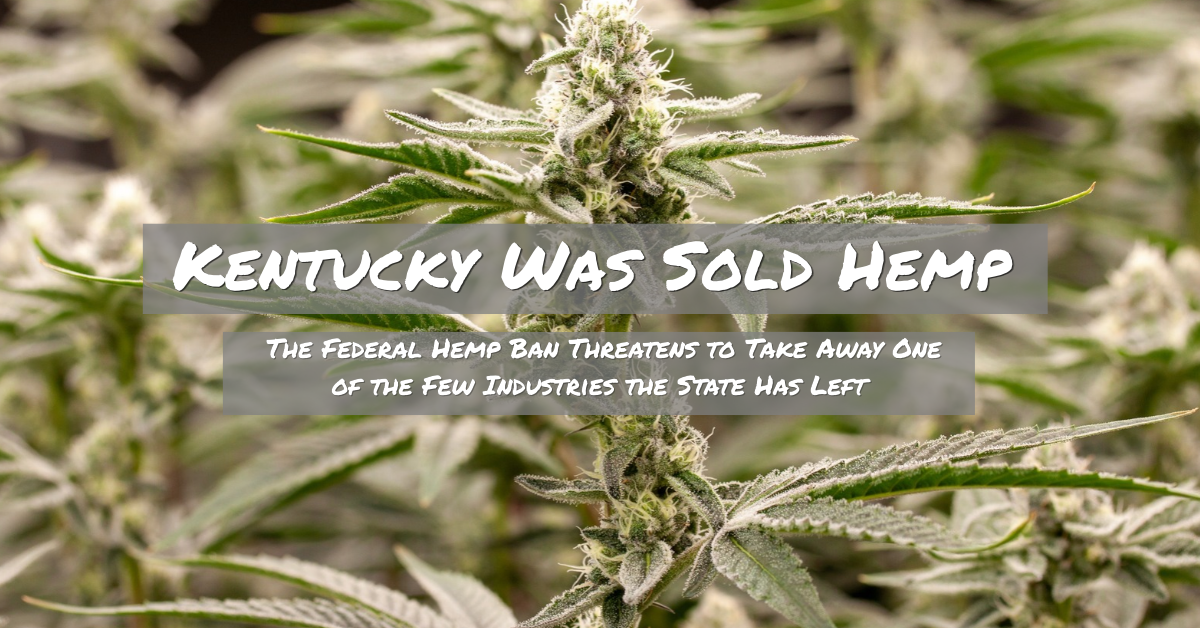
impending federal hemp ban threatened everything that people have spent nearly a decade building.
Zipperele personally knows several farmers who will lose everything if this bill passes. He too will have to shutter the business he’s spent the last seven years working on.
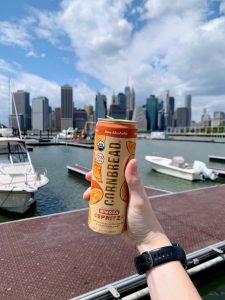
Cornbread is trying to diversify. They recently launched
mushroom gummies and some truly delicious
canned mocktails I had the opportunity to try and share during the
Fat Nugs Get Baked in NYC visit. But when your business is built around a crop the government can’t stop misunderstanding, there is no winning.
“Those product lines aren’t enough to save us if this passes,” Zipperele said. The reality is far bleaker: bankruptcy. “People can’t just pack up and go home. This will absolutely ruin lives.”
And Cornbread isn’t the only potential victim. The hemp industry in Kentucky supports over 3,000 jobs, according to
Cannabis Kentucky, nearly all of which will disappear in December if the federal hemp ban goes through. Multiply that by 50 states, and you start to get an idea of the scale of the impending destruction.
The
original bill set a deadline of November 12, 2026, for the new definition of hemp to take effect and essentially shut the intoxicating hemp industry down. A
30-day delay was recently passed, making the new deadline for industry death December 11, 2026.
Zipperele is not staying quiet about this. He’s active politically, organizing and advocating for hemp and Kentucky farmers. “I can’t tell you how many times I’ve sat in front of McConnell’s team and told them what will happen. This is going to hurt people.”
He’s a member of the
Hemp Round Table that has been tasked with creating regulations. But as usual, Uncle Sam isn’t making it easy. “The ban McConnell introduced required the FDA to differentiate between an intoxicating and non-intoxicating cannabinoids. They haven’t done that. They haven’t done anything. So we have no idea what will be legal after this. It’s complete chaos.”
Intoxicating Hemp’s Problems Come Home to Roost
Spend any time with members of the legal cannabis industry, and you’ll quickly uncover a sore spot: intoxicating hemp companies.
There’s good reason for frustration when medical and recreational cannabis companies are burdened with restrictive tax practices that make profit nearly impossible. Watching intoxicating hemp players ship products across state lines is frustrating, to say the least.
For Zipperele, the incessant competition between “weed” and “hemp” is the disheartening part. “I started Cornbread with my cousin because we were passionate about cannabis, and this was the closest thing we had. We’ve been advocating for cannabis on a state level, but this was access for people.”
He acknowledges that bad actors in space hastened the decline. “No good actors in the hemp space want
frankencannabinoids on the market. But to ban everything entirely puts the good guys out of business and makes products more dangerous. If you’re reading this and thinking ‘I don’t want an extension, I want regulations’-you do want an extension, so we can get regulations.”
Many people in the cannabis industry are rooting for this ban to go through. But watching pro-cannabis people cheer for this is hard for Zipperele to watch. “If you’re really worried about D8 and D10 and HHC, you should want more regulation that gives people access to the real stuff – not less. People are buying weed either way. If you’re for prohibition, you’re saying you’d rather people buy it off the street.”
Just as a rising tide lifts all boats, a storm can sink them all. Zipperele has a stark warning for the rest of the industry if this ban goes through: “You better believe if they can roll up and take back hemp to a Schedule I narcotic, they can do it to cannabis as well.”
When the Farm Bill passed in 2018, McConnell made his case for increasing American jobs, saying, “It’s all imported. There’s no reason why American farmers shouldn’t be able to grow this crop.”
Now, Zipperele, his employees, and the rest of Kentucky are staring down the barrel of the exact opposite. “Supporting hemp prohibition kills American jobs.”