Bri took a deep dive into all of the information she could find. “I was on the sixth or seventh page of the Google results, just looking for actual information, compiling everything I found. I came across the
Jamaican study and totally fixated on it. I found some people on Instagram who were willing to talk about it.”
So, Bri tried it. “I wasn’t going to smoke a blunt, so I packed a small toke out of a glass bowl. It changed everything. I could keep water down. I could eat and not puke it up.”
Her husband was, understandably, concerned. Bri shared her findings with him and the research she had compiled and let him come to his own conclusion: healthy mom, healthy baby.
“From then on, cannabis had a real purpose in my life,” Bri said. “It helped me eat and sleep.” She consumed from week 7 through week 27 of her pregnancy.
At the time, she lived in Texas, a state famous for its harsh cannabis penalties and wishy-washy attitude about
legalization. But Bri took a chance and was honest with her midwives. Surprisingly, they were supportive.
“They suggested edibles so I wasn’t smoking. But I couldn’t do it. I needed the efficacy of smoking.”
She started Blazing with Bri while pregnant to create a safe space for women to explore and discuss consuming cannabis while pregnant. “People said don’t do it. But it helped me. Doctors want to give you a pill while pregnant, but I’m not comfortable with that. I’m comfortable with plants.”
These days, every sesh has an intention behind it. “When I was freshly postpartum, I was so stressed. Being in your head affects your milk supply, which affects pumping and feeding. Cannabis would help me relax enough to breastfeed.”
Despite the controversy that can surround this conversation, Bri is confident in her decision. Without cannabis, I don’t know if I would have survived my pregnancy. It’s what got my baby here.”

Finding Patience in Motherhood with Cannabis
As Bri has walked down the path of motherhood, cannabis has been right beside her. “I relied on edibles when I was post-partum, so I didn’t smell like smoke. I started consuming tinctures, and that expanded my plant knowledge. I use topicals now too, and I didn’t know those existed”
Openly embracing the plant has been a catalyst for change in many areas of her life. “Being a mom gave me this career. I never would have started my Instagram if I didn’t need cannabis while pregnant, and I would not have gotten into this industry without it.”
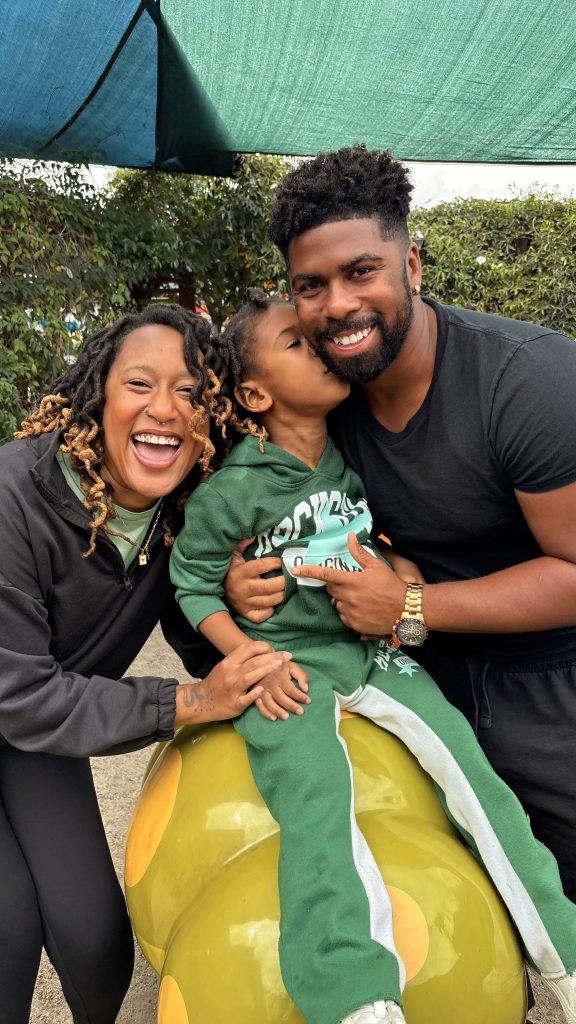
These days, Bri spends her time chasing around her now-4-year-old son, and her cannabis requirements look a little different. “I want strains to be social and playful and help me tap into my inner child during the day. At night, I want something to help me wind down. It’s really forced me to explore cannabinoids and terpenes and what balance is.”
Ultimately, a mindful relationship with cannabis makes motherhood feel better. “Cannabis makes me more patient; it lets me have those moments where I can play and be silly with my son.”
4-year-olds don’t care much about plants or medicine, but Bri hasn’t shied away from the early cannabis education. “We have some kids’ books on cannabis. I’ve shown him what the THC symbol [in California] looks like so he knows what’s not for him.”
Like many canna-parents, Bri is already preparing for the conversation to evolve as her son gets older. “We’ll educate him on cannabis like we educate him on medications and alcohol.”
Cannabis is a part of the household in other ways too. “We have a CBG vapor rub for topical use, and we’ve done CBD lollipops before. CBD and CBG in small doses can be quite beneficial. There is a different form of the plant for everything I need in motherhood!”
How Motherhood Helped Her Understand Herself Better
Motherhood is always an exploration and expansion of the self, but for Bri, that has come in some unexpected ways. It was her son’s diagnosis that spurred her own.
“The first sign was his speech delay. He was 2 when we got him a speech therapist.” But more than that, Bri’s motherly intuition knew her son needed additional support. “He would walk on his tiptoes, line up his toys very particularly, and words just disappeared overnight. Everyone said it was boy things, but I knew it was something else.”
When they moved from Arizona to California, the support available increased, so she got her son tested for autism. His report, which confirmed her initial suspicions, also raised more questions in Bri’s mind.
“I noticed they had little things that I did in there, things like eye tracking or other little habits. And my parents made comments about me being similar at his age. It took me down a deep rabbit hole.”
So, she got herself tested. And the results came back with ADHD and autism, commonly called “
AuDHD.”
“It was missed in me because I present well. But in retrospect, I see it. I thought everyone had a noisy mind. Growing up, things that were supposed to interest me didn’t. Rules that people followed, I didn’t understand. It was a facade.” It was an answer to a question Bri didn’t know she had been seeking, but suddenly, many things clicked into place.
There’s another level that comes with being open about being a cannabis consumer and a mom to a boy with autism in the Black community. “Things get passed off. He’s shy, or he’s special. Autism is like little white boy syndrome, because there’s just not enough resources dedicated to understanding it or supporting it.”
But her knowledge gives her perspective. “I look at my parents, and I see the genetic link. I wish my parents had more knowledge and could have given me more resources growing up.”
Cannabis plays a big role for Bri as a neurodivergent person, managing her symptoms and navigating the world. “Learning how to regulate my own emotions while teaching a little person how to regulate theirs – whew. Cannabis helps me mellow out and be there for my son when he had big emotions.”
Emotional regulation is a particular challenge for
neurodivergent people. Add the sensory overload of a screaming kid to the mix, and the responsibilities of keeping food on the table and clothes clean, and it can get overwhelming. “I can’t let my son’s emotions overwhelm me in the moment. I have to stay calm and cool and collected for him. My breakdown has to come later.”