Concussions and Cannabis: Science for the Stoners

This article first appeared in the Sports issue of Fat Nugs, published May 2025

Disclaimer: Not medical advice. Head injuries should be medically evaluated. CBD is not FDA-approved for the treatment of head injuries. Check your state’s laws before giving CBD to your child.

A few months ago, my 8-year-old son, Samba, suffered a concussion. Two blows to the head in less than 48 hours left him with nausea, dizziness, fatigue, brain fog, raging headache, and a major goose egg to show for it.

As a mom and nurse with a master’s degree in Medical Cannabis Therapeutics, I had no hesitation starting him on intensive whole-plant cannabinoid therapy from the start (yes we sought medical care).

Contact sports pose an obvious risk for concussion, but head injuries and concussions can happen to anyone, from young children (who require less force than adults to cause damage) to seniors who can fall and hit their head, and everyone in between.

There currently are no FDA-approved treatment options for concussions, outside of waiting it out and managing symptoms. Cannabinoids hold massive potential to fill this treatment void. Here’s what we did.

What is a Concussion?

According to the DSM-5, the leading handbook of medical diagnosis for clinicians, a concussion is diagnosed when these 2 elements are present:
  1. An obvious impact injury, such as a fall, car crash, or football tackle.
  2. One or more of 22 symptoms, including dizziness, headache, brain fog, nausea, etc following the impact.
A second hit before the first one has healed can lead to second impact syndrome (SIS), which can cause catastrophic brain injury. This is why getting the brain back to baseline as fast as possible before risking another injury is so important!

When Samba first hit his head, he had fallen off a 4-foot wall and face-planted on the concrete. Two days later, he fell and hit his head while playing soccer (he shouldn’t have been playing). We took him to the emergency room after the second hit, where they did a CT scan to make sure he didn’t have any sort of brain trauma. Thankfully he didn’t, but he had the typical concussion symptoms of nausea, fatigue, headache, and brain fog.

What Happens in the Brain During a Concussion?

Samba’s concussion went through 2 phases when hit his head:

Phase 1: Excitatory

When Samba hit his head on the concrete, it wasn’t the impact of his brain against his skull that caused damage, it was the stretching and shearing of the brain cells (neurons). This stretching messed up the electrical balance in his brain, causing millions of neurons to fire at once, which is why he initially saw stars (Bradford).

In other cases, people may have double vision, ringing in the ears, dizziness, or even blackout. Phase 1 usually lasts a few hours. During the electrical storm, the neurons release a lot of a chemical messenger called, “glutamate.” Glutamate is an excitatory neurotransmitter in the brain, and it has important functions in learning and memory, but too much glutamate is no bueno and can lead to cell damage or cell death.

Phase 2: Spreading Depression

Here comes the sciencey part: all of that extra glutamate in his brain opens up the doors to allow calcium to flood into the neurons. This calcium messes with the mitochondria, the part of the cell that makes energy, stopping them from making energy the brain needs. This is why Samba was tired for days after he caught the ground with his face.

It usually takes between 2 to 4 weeks for the brain’s energy levels to get back to normal, which is why about 70% of people who get concussions feel better in about a month. Unfortunately, the other 30% have symptoms that last much longer, sometimes for months or even years. The longer these symptoms last, the harder they are to get rid of (Bradford).

Since these changes are more about how the brain’s cells work and not about physical damage or bleeding, they weren’t seen on Samba’s CT scan and wouldn’t be seen on an MRI, if he had one.

Neuroinflammation and Oxidative Stress from Concussions

Following Samba’s concussion, something else happened in his brain: neuroinflammation and oxidative stress. Neuroinflammation is when the body’s defense system reacts to changes in the brain by sending out special molecules called cytokines. Oxidative stress happens when there are too many harmful particles called free radicals, which can damage brain cells.

During his injury, Samba’s brain released certain cytokines, which are like alarm signals in response to injury. These include:
  • Interleukin-1β (IL-1β)
  • Interleukin-6 (IL-6)
  • Tumor Necrosis Factor-alpha (TNF-α)
A little bit of inflammation can actually be good for the brain, helping to keep things in balance. But too much inflammation, especially if it lasts a long time, can be harmful. It can lead to serious brain diseases, make you feel anxious or depressed, and cause other concussion symptoms that can last for months or even years (Rathbone et al.)
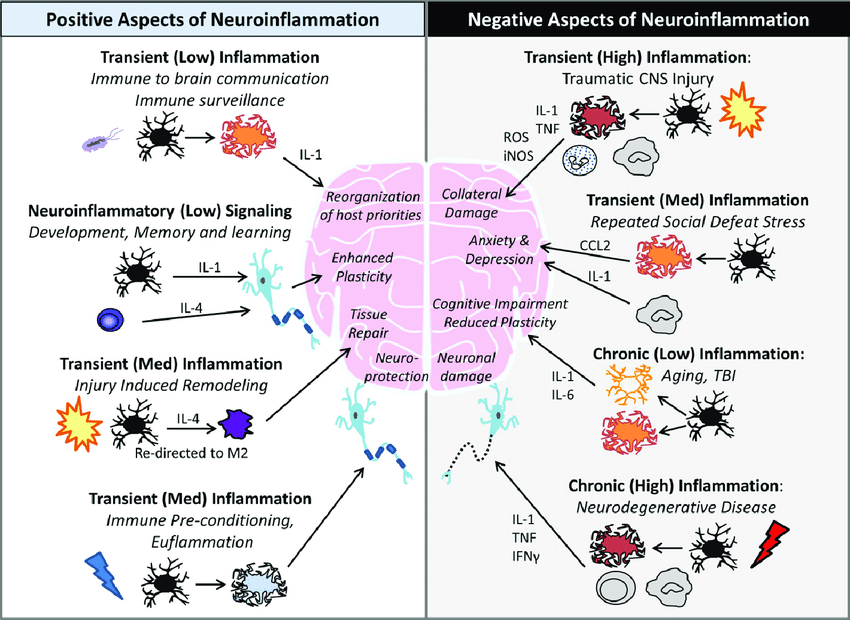
concussions and cannabis_mechanisms of concussion_Image by Jonathan Godbout

Cannabinoids to the Rescue

Knowing all these things were going on in his brain, and seeing it manifested through his symptoms of headaches, brain fog, and fatigue, I wasted no time in starting him on whole plant cannabinoids (the same formulation Gilbert Brown talks about in his interview). The goal was to reduce the neuroinflammation and protect his brain from the free radicals.

Right now, there aren’t any specific medicines for treating concussions. Some common pain relievers might help a bit, but using them too much can harm your organs.

To slow down Samba’s little neurons from releasing inflammatory cytokines, we gave him a formulation that included CBD and CBG, since preliminary research shows that CBG, CBD, and CBD+THC, (not THC alone) were effective in reducing the exact cytokines elevated in concussions (Henshaw et al.)

We also included the acids, CBDA and CBGA, because those cannabinoids (along with many others) have strong antioxidant properties, meaning they can scavenge free radicals, which are basically rogue molecules that can cause damage to our fragile brain cells (Dawidowicz et al.). Yes, there were also some terpenes and a small amount of THC in what we gave him. We’re all about that whole plant goodness.

When Samba took his Thrive xL, the cannabinoids worked to decrease that release of harmful cytokines, gobble up the free radicals, and in his words, “make my brain feel like normal.”

As far as dosing, this was very different from what Gilbert Brown did. Since Samba’s concussion was acute, we gave him relatively high doses at first (about 300mg of total cannabinoids per day), and slowly went down as his symptoms improved. Since Gilbert Brown’s head injuries were decades ago, he’s on more of a maintenance regimen of about 1 dropper, or 100mg per day.

Samba was symptom-free within 5 days and back out on the soccer field in 7, with the clearance of his neurologist. Two months later, he remains symptom-free.
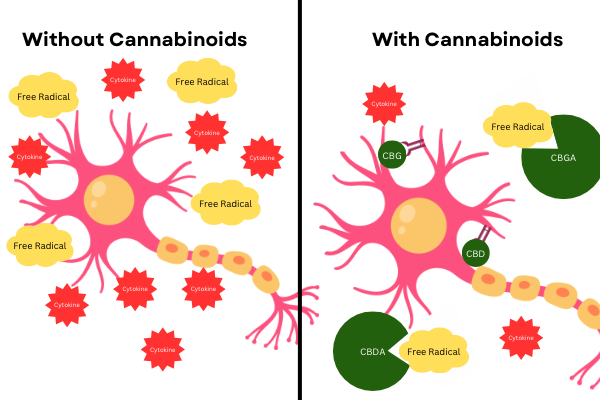
concussions and cannabis_cannabis treatment outcomes_image created by megan

Human Research on Concussions and Cannabis

It’s important to note that, like many conditions that people find cannabis effective for, we have very limited research on cannabinoids for concussions.
  • A small study done in 2023 found that those who used cannabis had lower inflammatory markers and less eye movement impairment after inducing a minor concussive state with 20 headings of a soccer ball than controls who didn’t use cannabis (Kalbfell et al.)
  • Another study from 2019 found that cannabis use was associated with less severe symptoms 3 and 4 weeks after a concussion than non-cannabis use (Lawrence et al.).
The Future of Cannabis and Concussion Treatment

There currently are no FDA-approved treatments for concussion injuries, but cannabinoids offer a promising future. The NFL is currently spending $1 million on much-needed research on CBD for pain and concussions.

We need more research, but understanding the science behind how cannabinoids work against neuroinflammation and oxidative stress helps make sense of why we see cannabis working for symptoms of both acute and chronic head injuries.

My advice? If you’ve experienced a head injury and are diagnosed with a concussion, you may want to consider starting cannabinoid therapy as soon as possible. Of course, it’s not appropriate for everyone, so working with a cannabis clinician (like EntheaCare) to help guide you on your healing journey is important.

Remember, concussions can happen to anyone. Given the research, stoners appear to potentially have a leg up in recovery in the event of a head injury.

When appropriate, cannabinoids (beyond just THC) can potentially be a safe and effective therapeutic option for managing symptoms and bringing your brain back to normal, whether your head injury was yesterday or a decade ago. And yes, this option should even be considered for kids, but clear it with your doctor or work with an expert.

As we learn more about treating concussions, it seems like cannabinoid therapy might be a cool new way to help our brains heal and get back to normal. It’s been incredible to see this happen in real-time with both Gilbert Brown and my son, Samba.

About the Author

Megan Mbengue is a cannabis nurse educator and founder & CEO of EntheaCare, formerly Trusted Canna Nurse.

References

  • Bradford, Mike. “How Hard Is Too Hard? Examining The Forces Behind Concussive Impacts.” Completeconcussions.Com, 25 Mar. 2024, https://completeconcussions.com/concussion-tips-information/how-hard-is-too-hard-examining-the-forces-behind-concussive-impacts/.
  • Dawidowicz, Andrzej L., et al. “Cbg, Cbd, Δ9-Thc, Cbn, Cbga, Cbda And Δ9-Thca As Antioxidant Agents And Their Intervention Abilities In Antioxidant Action.” Fitoterapia, vol. 152, 2021, p. 104915, https://doi.org/10.1016/j.fitote.2021.104915.
  • Henshaw, Frances R., et al. “The Effects Of Cannabinoids On Pro- And Anti-Inflammatory Cytokines: A Systematic Review Of In Vivo Studies.” Cannabis And Cannabinoid Research, vol. 6, no. 3, 2021, pp. 177–95, https://doi.org/10.1089/can.2020.0105.
  • Kalbfell, Rachel M, et al. “The Modulatory Role Of Cannabis Use In Subconcussive Neural Injury.” Iscience, vol. 26, no. 6, 2023.
  • Lawrence, David W., et al. “Cannabis, Alcohol And Cigarette Use During The Acute Post-Concussion Period.” Brain Injury, vol. 34, no. 1, 2020, pp. 42–51, https://doi.org/10.1080/02699052.2019.1679885.
  • Rathbone, Alasdair Timothy Llewelyn, et al. “A Review Of The Neuro- And Systemic Inflammatory Responses In Post Concussion Symptoms: Introduction Of The “Post-Inflammatory Brain Syndrome” Pibs.” Brain, Behavior, And Immunity, vol. 46, 2015, pp. 1–16, https://doi.org/10.1016/j.bbi.2015.02.009.

Search for Articles