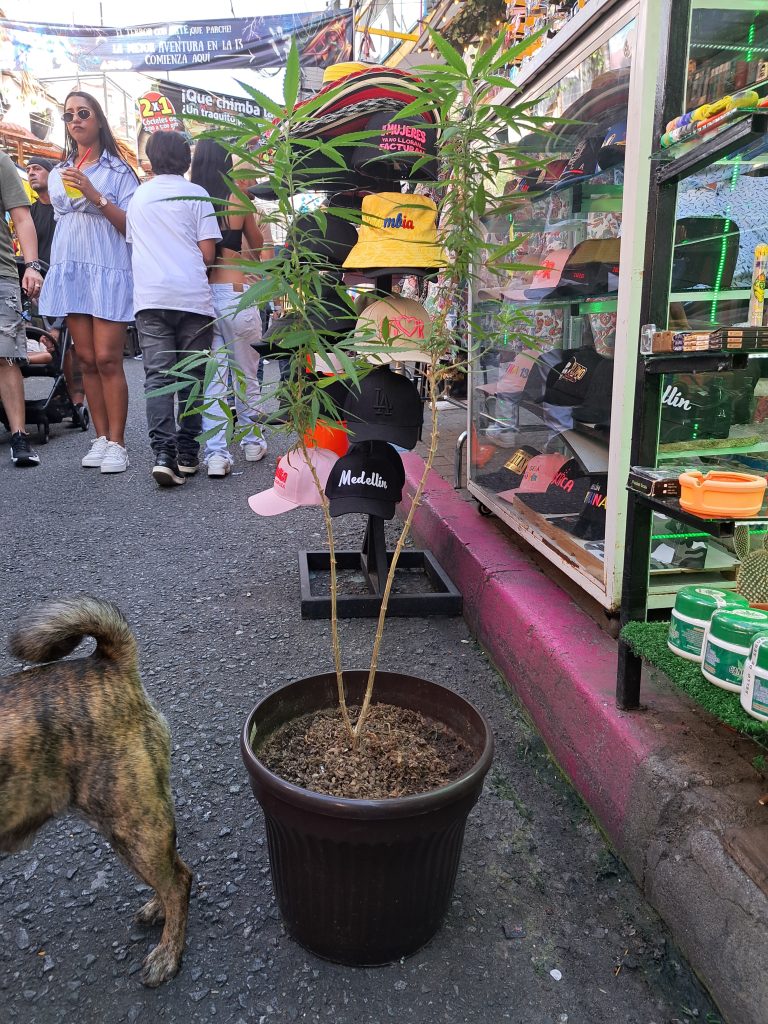
Weed was legalized for personal possession years ago, yet it can’t be sold in stores. You can, however, find bowls, grinders, bongs, pipes, and other cannabis accoutrements pretty much everywhere. In small, horse-filled towns and infamous big cities. Cheek by jowl with these smoking implements, you’ll often see coke spoons, especially in Medellín. Sometimes the display will sell cannabis paraphernalia and, in the same display, sell sex toys (sometimes found next to power tools, which can also be a sex toy if you’re bold/stupid enough).
You’ll see pot plants in coffee shop windows (just for decoration, the owner will tell you). You’ll smell weed wafting from Airbnbs in major cities. Crowds of people will populate parks in Pereira, openly blazing. A little ways off from one park is a playground and a basketball court. The smokers don’t bother those on the playground any more than the patrons in a bar don’t force booze on those walking by.
Smoking outside in groups isn’t uncommon, as free zones exist in some cities where cops won’t bother you for smoking.
How close is cannabis to becoming even easier to access? In 2022, a bill was advanced by Colombian legislators to legalize recreational marijuana. However, in 2023 it failed to secure enough votes on the Senate floor. Similar amendments stalled in 2023 and 2024.
How Does A Visitor Get Cannabis in Colombia?
If you’re really lucky, you’ll find a stray joint outside of your rustic yet luxe cabin—perhaps at an accommodation that’s perched on a cloud forest above a tranquil town. A date will ask if you want to smoke and watch the sunset. A local smoking outside a reggae bar might offer you a hit after you make small talk in broken Spanish.
The Ease of Finding Cannabis Sellers in Colombia
You can’t rely on random generosity and happenstance. Fortunately, cannabis sources are ubiquitous. With a literal whistle, they can be called over. In some places, that is. The sellers are wearing a telltale garment identifying them. There isn’t a cannabis insignia on the garment; it’s a bit subtler than that, but not by much. The cannabis will be incredibly cheap. You can ask for a dedo (“finger” in Spanish). It’s also called a bareta, but getting into the weeds on the terminology isn’t strictly necessary or all that interesting.
Is it expensive? Hardly. A pre-rolled joint can run you less than three dollars. But you can get it cheaper. It depends on how exotic you want to go, but don’t expect to pay US prices. As a local source will tell you, Colombians enjoy mind-altering substances as much as the next country, but they won’t tolerate exorbitantly priced goods.
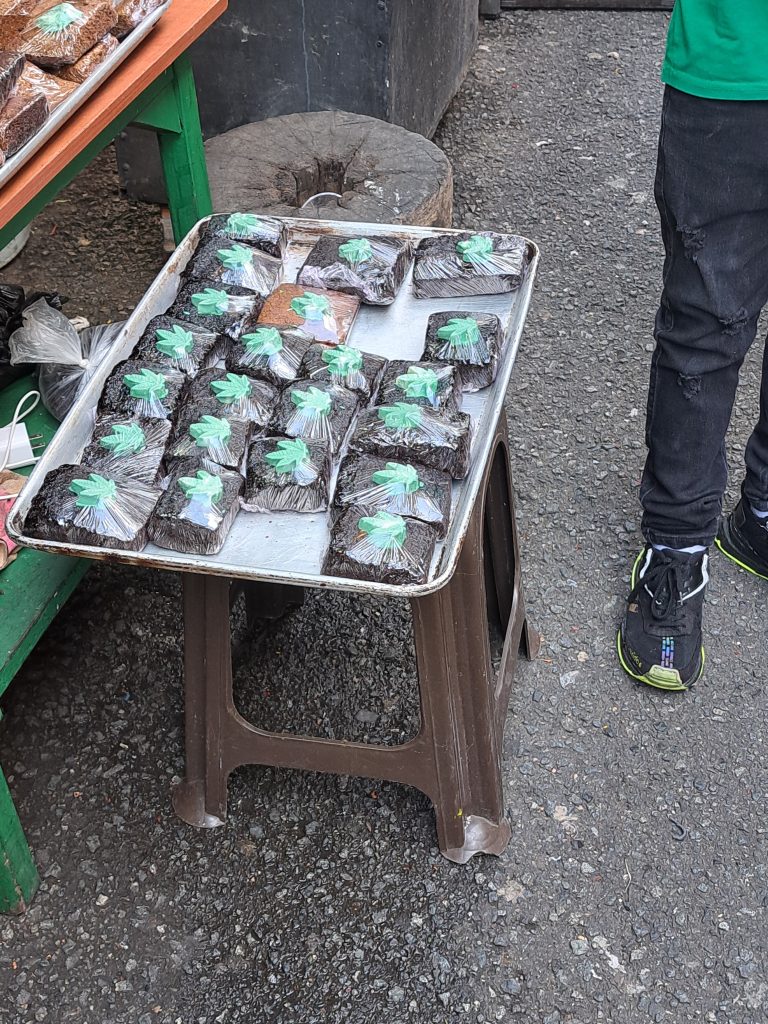
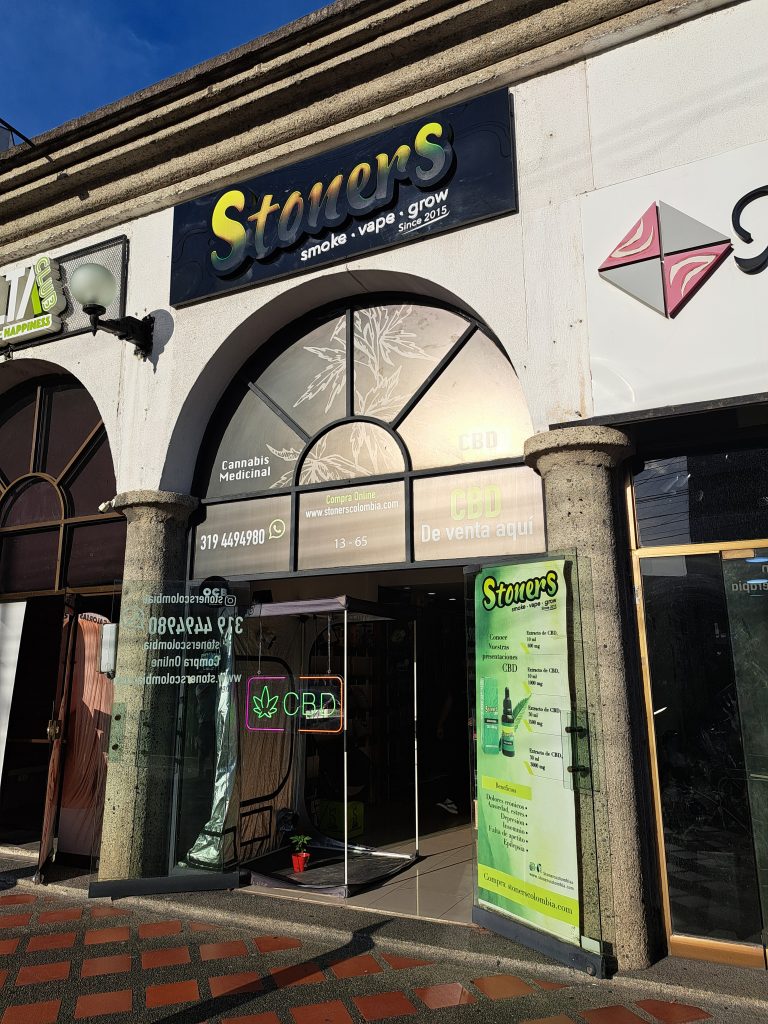
If you’re looking for flower or edibles, you can’t go wrong with Medellín. A city full of dispensaries. A worker whose eyes look like he’s been staring at the sun all day might encourage you to try a vape in his store. He’ll excitedly tell you about the edibles they have. The chocolates and gummies. There are almost always gummies at dispensaries. Even though they’re not technically legal to sell. A pack is often only 30k for several hundred grams worth (about ten bucks).
You might get lucky and your vape stops working. At the dispensary, you will learn all about the cannabis business. They’ll tell you so much you might be compelled to ask them how they know you’re not a cop. They’ll reply, “because you’re American.”
Yet at other dispensaries, apropos of nothing, they’ll blithely ask if you’d like a source. This source, which can deliver to you, might ask for a minimum purchase of ten grams for 170,000 pesos (a little over 50 bucks). The interaction will have to take place in Spanish. Google Translate is your friend, albeit an imperfect one.
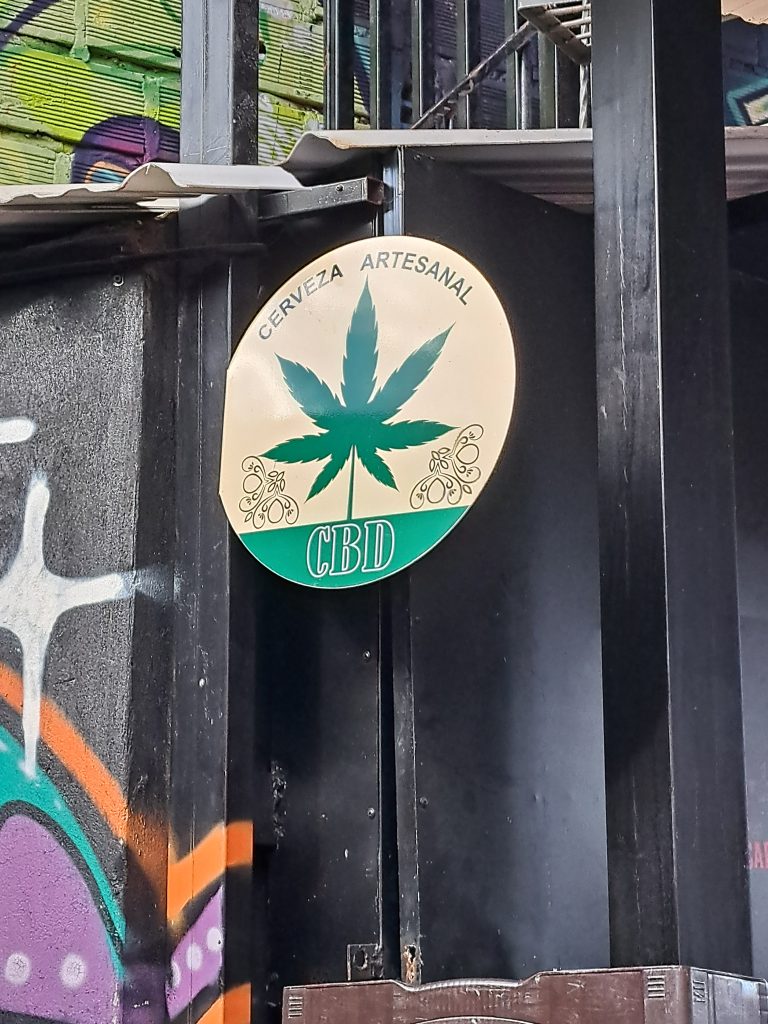
Other dispensaries will have CBD products, no smoking implements, and certainly nothing to smoke, chew, dab, or vape.
What About the Police?
Despite a seemingly lax attitude toward smoking outside—some people will strut outside with a lit joint in their mouths—the fines for getting caught smoking in public are stiff. However, that’s if it comes to that. If you play your cards right, you can probably get away with it for 100K, or about 30 dollars, as a budtender will tell you.
Looking to combine sightseeing while obtaining edibles? Head over to Comuna 13. Once a notorious cartel stronghold, this area is now a vibrant district not dissimilar to Khao San Road in Bangkok. The narrow, crowded streets may be a pickpocket’s wet dream, so keep some common sense about you. No dar papaya (don’t show papaya), as the locals say—i.e., don’t flash your money or be flashy in general. And try not to take too many pictures, as snatching phones is a common issue in the country.





 Moreover—and more importantly—if the police see you smoking, they might be content to leave you be, unless they need to “make a number.” And, as mentioned, there’s a good chance you can “talk” your way out of it. Using the universal language, of course. One that doesn’t require Duolingo.
This seller will tell you that getting arrested for cannabis is uncommon, unless you are a foreigner and being really obvious. He’ll warn you not to smoke in popular tourist areas, such as Parque Lleras in Medellin. This person will speculate that the government barely cares about cannabis. He’ll opine that the government would probably prefer people smoke weed and Colombia lose its cocaine reputation. Even though cocaine is requested “eight times out of ten.” He’ll add that most Colombians get their cannabis from a local dealer.
Moreover—and more importantly—if the police see you smoking, they might be content to leave you be, unless they need to “make a number.” And, as mentioned, there’s a good chance you can “talk” your way out of it. Using the universal language, of course. One that doesn’t require Duolingo.
This seller will tell you that getting arrested for cannabis is uncommon, unless you are a foreigner and being really obvious. He’ll warn you not to smoke in popular tourist areas, such as Parque Lleras in Medellin. This person will speculate that the government barely cares about cannabis. He’ll opine that the government would probably prefer people smoke weed and Colombia lose its cocaine reputation. Even though cocaine is requested “eight times out of ten.” He’ll add that most Colombians get their cannabis from a local dealer.