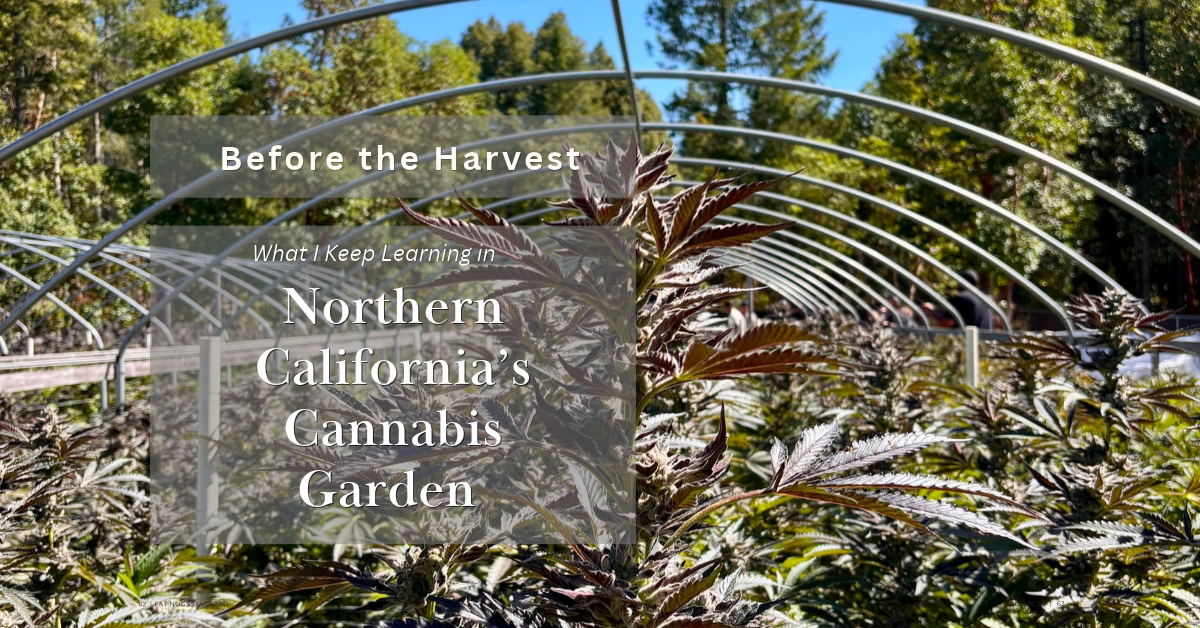

Harvest season is the busiest and most stressful time of year for hash makers. You’ve spent months growing, washing, and collecting trichomes. Now comes the part that can make or break the batch: drying. Get it wrong, and you lose the terpenes, the color, and the yield you worked so hard for.
Every Xiros Mikro freeze dryer ships with a bubble hash freeze-dry recipe document, a Standard Operating Procedure (SOP) that lays out four ready-to-use recipes. It’s a practical reference for anyone running a freeze dryer, whether you’re on your first harvest or your fiftieth.
Why We Wrote Recipes Into the SOP
If you’ve never used a freeze dryer, the controls can look intimidating. Temperature, vacuum pressure, time, ramp, soak, each variable affects how water sublimates out of your hash, and each one can affect terpene retention and trichome structure.
So instead of handing users a blank slate, we hand them a starting point. The bubble hash freeze-dry recipe document gives you four sets of parameters to enter into the Xiros Mikro yourself. Experienced users can treat them as proven baselines to build on; newcomers can follow them step by step without needing to understand every variable on day one. Either way, you pick the recipe that matches your starting material and your goals.
The Xiros Mikro has 12 program slots where you can store recipes directly on the machine. That means you can enter the four SOP recipes once, save them, and pull them up whenever you need them, no reprogramming every batch. You’ve still got eight slots left over for your own custom programs as you refine your process.
As you gain confidence, you can adjust those parameters and build your own programs. But the recipes are there so you’re never starting from zero, especially during harvest, when there’s no time to waste.
Why Vacuum Pressure Matters More Than You Think
Before we get into the recipes themselves, it helps to understand what’s actually happening inside the chamber and why we built the recipes around pressure as much as temperature.
Freeze drying works through sublimation: ice transitions directly to vapor without passing through a liquid phase. This requires a deep vacuum, typically below 500 mTorr or 0.67 mbar. But here’s the counterintuitive part: lower pressure isn’t always better for terpene preservation.
Research on freeze-drying aromatic plants shows that running at too low a pressure can actually increase volatile compound loss. The reason is subtle: an absolute vacuum acts as an insulator, slowing heat transfer and extending drying time. Meanwhile, extremely low pressure can cause glandular trichomes to rupture, releasing their precious oils into the chamber instead of keeping them locked in the resin.
This is why controlled vacuum, not maximum vacuum, is the goal. The optimal range for cannabis freeze-drying appears to sit between roughly 500 and 1500 mTorr. Within that window, moisture sublimates efficiently without stripping the compounds you’re trying to preserve.
Temperature: The Other Side of the Equation
Temperature and pressure work together. During primary drying, the product must stay below freezing (typically well below 0°C) to prevent melting and collapsing. As drying progresses, the shelf temperature can be raised gradually, but even in the secondary drying stage, it should stay relatively low. One patent specifies a maximum of around 12°C (55°F), with most of the process held well below that.
The delicate balance is this: too cold and slow, moisture lingers; too warm, and you risk terpene volatilization and trichome collapse. This is exactly why the four recipes exist to give you proven starting points rather than forcing you to find that balance from scratch.
The Four Bubble Hash Recipes at a Glance
The four recipes are built around two variables: starting temperature and drying speed. Here’s what each one is for, without getting into the numbers.
Recipe 1: Standard Drying
The balanced option. This recipe is for users who want gentle, even moisture removal without rushing the process. It’s a solid starting point for most strains and a dependable default when you’re working with new material.
Recipe 2: Fast Drying
Accelerated drying for high-yield, stable strains. If your material is predictable and you want to move through the harvest faster, this recipe shortens the cycle while still protecting quality.
Recipe 3: Cold Start, Extended Drying
This one is built for greasy, unstable strains with delicate terpenes. It starts colder and dries more slowly, giving moisture time to release gradually instead of being pulled out too aggressively. If you’ve ever watched a beautiful batch, go dark or lose its nose, this recipe is your answer.
Recipe 4: Cold Start, Fast Drying
A faster cold-start option. It still protects terpenes during the early stages, but it moves through the cycle more quickly than Recipe 3. Good for harvests where you need cold-start care but also need to keep up with volume.
Start Simple, Then Customize
Use them for your first harvest runs, learn how your strains respond, and then start tweaking. Whether you’re new to freeze drying or you’ve run dozens of batches, the SOP is worth keeping within reach. Open it, pick a recipe, enter the parameters, and let the machine do the hard part. You can get fancy next harvest.
https://us.hollandgreenscience.com/products/xiros-mikro