“I had a very productive two days seeing old friends, meeting some new ones, and getting an initial feel for the market,” said Richard Weinstein, Managing Partner of sponsoring company
BioSecure Flooring. “One of the primary reasons why I go to shows is the opportunity to spend time with the other leading service providers. And, in Richmond, it seemed like everyone was at the after-party, and I even bumped into a friend I had not seen in 6 years.”
That type of connection was exactly what the event was intended to facilitate. For participating companies, those conversations also represented an opportunity to begin establishing relationships before Virginia’s adult-use marketplace is fully operational.
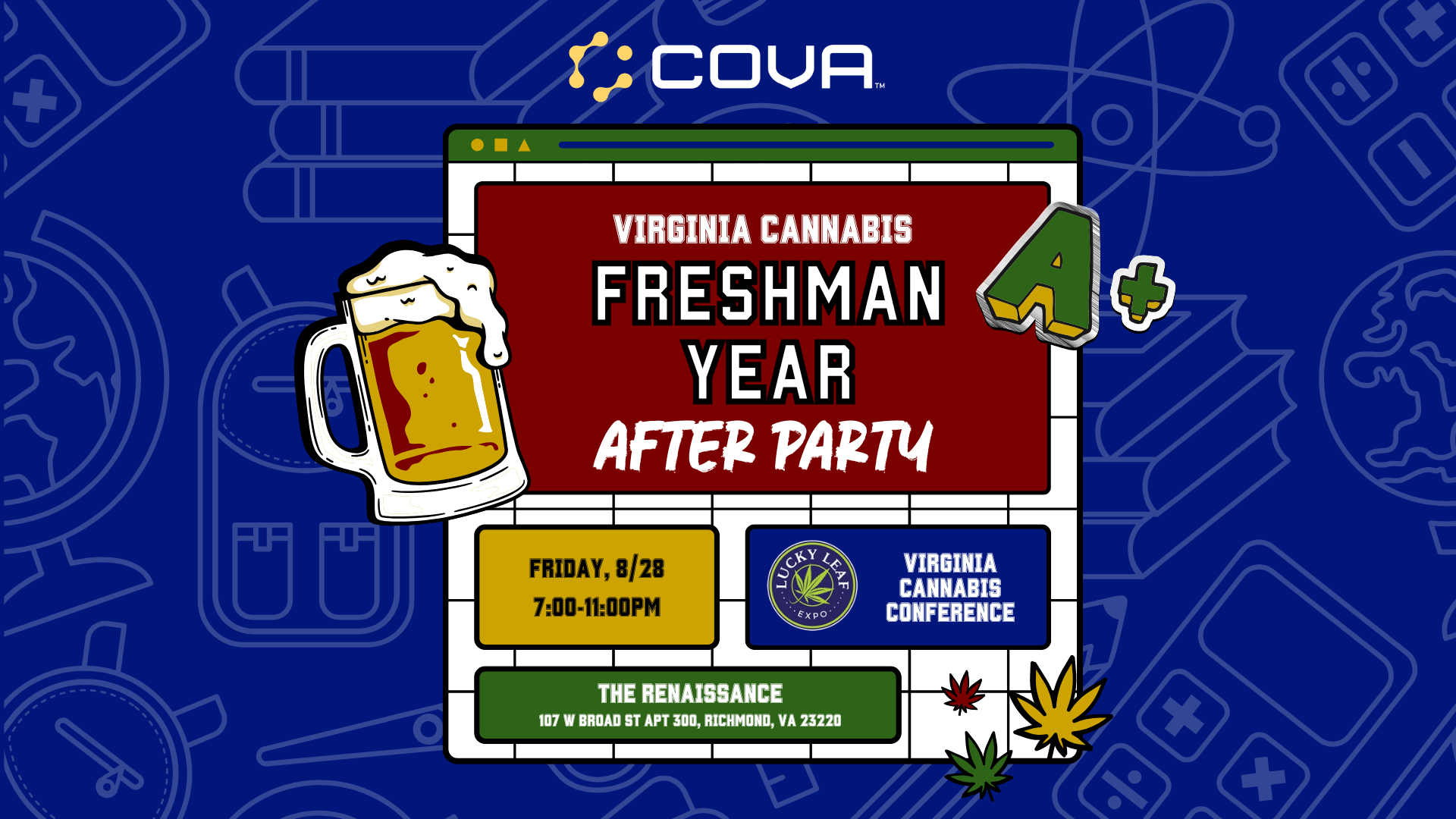
“The after-party was the highlight of the show, and most of the show’s attendees attended the event,” said
Jesse Wexler, Senior Account Executive at
Cova Software, the party’s primary sponsor. “It was hosted in a beautiful location and set the tone for great conversations with many people who I hadn’t had the opportunity to meet prior.”
The party also created an opportunity to leave an impact beyond the ballroom. Following the event, KB Cannabis Consulting donated usable books, pencils, rulers, and other supplies from the décor to a local teacher and donation center, giving the Freshman Year theme a meaningful second life in the community.
“The after party was genuinely great—strong venue, great crowd, and a good mix of engaged vendors and aspiring license holders,” said
Chris Reid, Head of Sales and Partnerships for Cova Software. “The energy in the room was real, not forced, and KB did an excellent job putting it together.”
The Freshman Year After Party was made possible with support from companies investing early in Virginia’s emerging cannabis industry, including Cova Software, Chicanna,
Panacea Payroll,
TSRgrow, Tenax Strategies,
Growers Choice Seeds,
Cannaspire, BioSecure Flooring,
Greenzone Engineering,
RIOCOCO,
Pisgah Peak Ventures,
CannaContent,
Cannabis License Experts, and
Lions Share Creative. Their support helped create a space for operators, entrepreneurs, and industry professionals to connect while building relationships that will continue well beyond Richmond.
Virginia Cannabis Is Still in Its Freshman Year
The “Freshman Year” theme captures where Virginia finds itself today. The Commonwealth is preparing for regulated adult-use retail sales to begin July 1, 2027. With the regulatory framework still developing, prospective operators have plenty to do—and plenty they still do not know.
“It’s early days, and the people that were there are doing the work now to be ready to put together the most comprehensive application package possible,” said Jesse Wexler. “It’s always refreshing to meet entrepreneurs that have a plan and are acting on it and figuring out where their gaps are. Overall, it was a successful expo.”
That early stage was reflected in expo attendance, but not necessarily in the level of engagement.
“Attendance was lighter than I would have liked, and I think that’s a direct reflection of where Virginia is right now. The statute had a rocky rollout, and the regulations still haven’t been finalized, so a lot of people are genuinely unsure what this industry is going to look like,” said Chris Reid. “On the upside, my speaking session was a real bright spot — I got more audience questions there than at almost any other market in which I’ve spoken. People are paying attention, want to be engaged, and are asking the right questions.”
That level of engagement also underscored the importance of credible education as Virginia’s market takes shape. With key details still being developed, attendees weren’t just looking for answers—they were trying to distinguish established facts from speculation.
“There’s a lot of enthusiasm for this market, and my talk was well received. But, there’s also a lot of misinformation, especially with the new bills and licensing guidelines. I focused on separating what we actually know from what we don’t,” said
Warren Harasz, Chief Compliance Officer for sponsoring company Cannaspire. “The capped retail structure creates a real value proposition, and preventing municipalities from opting out was a genuine win. That said, localities still have meaningful control to make life easier or harder for operators.”