
This interview first appeared in the Prisoners issue of Fat Nugs Magazine, published February 2025.
If you are over 40 years old, you can probably recall the propaganda of D.A.R.E., Just Say No, and other anti-drug campaigns of the last four decades. The ads for these programs seemed to be in a constant loop on TV and radio. If that wasn’t enough, people would come to your school and preach the gospel of The War on Drugs and you had better listen!
A key part of these campaigns was our government’s belief that in order to deter criminals, drug offenders were given maximum sentences when caught, even when many of these crimes were non-violent. Congress supported these efforts, and even today, many people are still incarcerated while violent criminals have been paroled before them.
Knowing there were harsh laws in place, what made men and women take the risk to smuggle cannabis into the US? What inspired Randy Lanier, an accomplished race car driver, climbing to the top of his field, to risk it all?

The 1970s: A Dealer’s Dream
The 1970s were many things, but for a cannabis smuggler, it was the dream decade. Cannabis left the counterculture of the 60s to find herself becoming mainstream by the 70s. Herb was being smuggled from Mexico, Central America, the Bahamas, and other parts of the world. People from all walks of life were consuming, and there was money to be made, if one was willing to take the risk.
Randy was 15, in high school, working construction, and selling cannabis. He spent the next few years of his life establishing himself as a dealer, bringing the contraband in via boat from the Florida canals. He was also busy getting married, having a baby, and becoming a racecar driver.
South Florida in the 70s, before the building boon, had many remote places to hide your stash and money. Houses sat on several acres, and prices were affordable, so Randy was able to purchase several homes to store his product and a place to hide the money.
Randy paid cash for everything. He started a Jet Ski Rental business to legitimize his earnings, fulfilled his dream of racing cars, and became very good at it. He accomplished this all while smuggling more and more cannabis into the US.
Everyone Randy met seemed to be in the smuggling business, so life was great! The runs got larger, and eventually Randy and his team met a group in Colombia that cultivated amazing cannabis. He now had a direct connection to the product, but it was 1982, and times were beginning to change. Reagan was president, and the War on Drugs was full steam ahead.
The Anti-Drug 1980s
By the early eighties, cocaine had started to surpass cannabis as the drug of choice, and the Reagan administration was hell-bent on keeping all drugs out of the US. History has shown prohibition doesn’t work, but the President was determined, and he had the full support of the Congress behind him.
They concentrated on South Florida as the main source of where cannabis and cocaine were smuggled in. Overnight, the Coast Guard and Customs were outfitted with all the boats, radars, guns, and money needed to get those breaking the law.
Fast forward to 1987, and Randy’s fast-paced life came to a screeching halt while fishing off the coast of Antigua. He was picked up by the FBI and extradited to Illinois to face charges of creating a criminal enterprise, distribution of cannabis, and impeding the IRS. In total, he was sentenced to life, plus 45 years for all 3 charges.
Life➕️45 Years – 1987
Randy wrote his first night in prison felt like an “endless darkness, disappointing his parents and never getting to live with his children or wife.” Some days felt ok, but many brought dark loneliness and guilt of not being with your family or providing for them. It took seven years for the Feds to seize all his money and possessions. His family became targets for more arrests, accused of aiding and abetting, whether they did or not. Worst of all, Randy could do nothing because he was in jail.
Days turn into weeks, weeks into years, and years into decades. Randy helped other prisoners endure their stays in prison. He stayed mentally alert by taking classes and running the prison grounds to stay fit. Suddenly, it had been 19 years on the inside. All Randy could do was keep moving forward.
Randy says it was his empathy that saved him from the madness of his confinement, the fact that he was able to help others. Every few years, a parole hearing would happen, but the answer was always no. Randy kept the hope alive that one day it would change.
27 Years Behind Bars
27 years went by, and Randy was granted an early release from prison. Rule 35 allows for a reduction in federal prison sentences under certain circumstances. Under the conditions of his release, Randy had to stay in a halfway house for six months on his way to freedom.
He was lucky: his wife Pam and children had been supportive through the years while many in similar positions lost their families. He served his time in prison and, since his release had helped others find the path to becoming empathetic and grateful. During Randy’s prison term, the War on Drugs had become a complete failure. It was most successful at decimating families and bankrupting them in the process.
During the years of Randy’s incarceration, cannabis began to be hailed for its medicinal value, was decriminalized in many states, and became accepted by the masses. States were passing medical cannabis programs, opening dispensaries, and more. Many advocacy groups formed to help educate and advocate for the release of non-violent cannabis prisoners. Some of these groups advocated for Randy and to this day, he returns the favor.
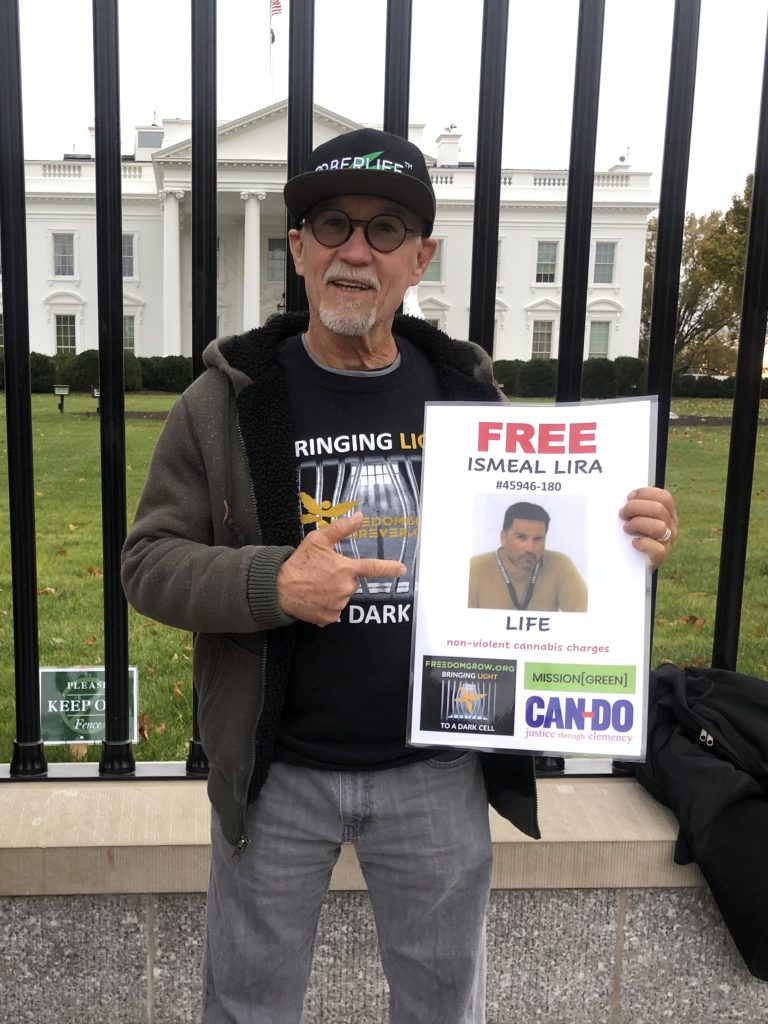
Today, Randy is an ambassador for Freedom Grow. A 501 (c) (3) organization, Freedom Grow’s mission is to bring light to a dark cell. They advocate for the release of nonviolent cannabis prisoners and assist those still incarcerated with ‘The Wish Program.’ The program helps with commissary money, continuing education, family outreach, and much more. There would be no cannabis industry without those who were arrested and still serve time for a plant that heals. NO ONE should be in jail for a plant!
If you would like to donate, you can do so on their website.
*A previous version of this article indicated that Randy Lanier was moved to a lower security facility for good behavior. This was incorrect.