

Piatella: The Rarest Grade of Solventless Hash Comes to Missouri

A Missouri brand just introduced one of the most elusive concentrates in cannabis. What is piatella, and what makes it the elite cannabis product on the market?
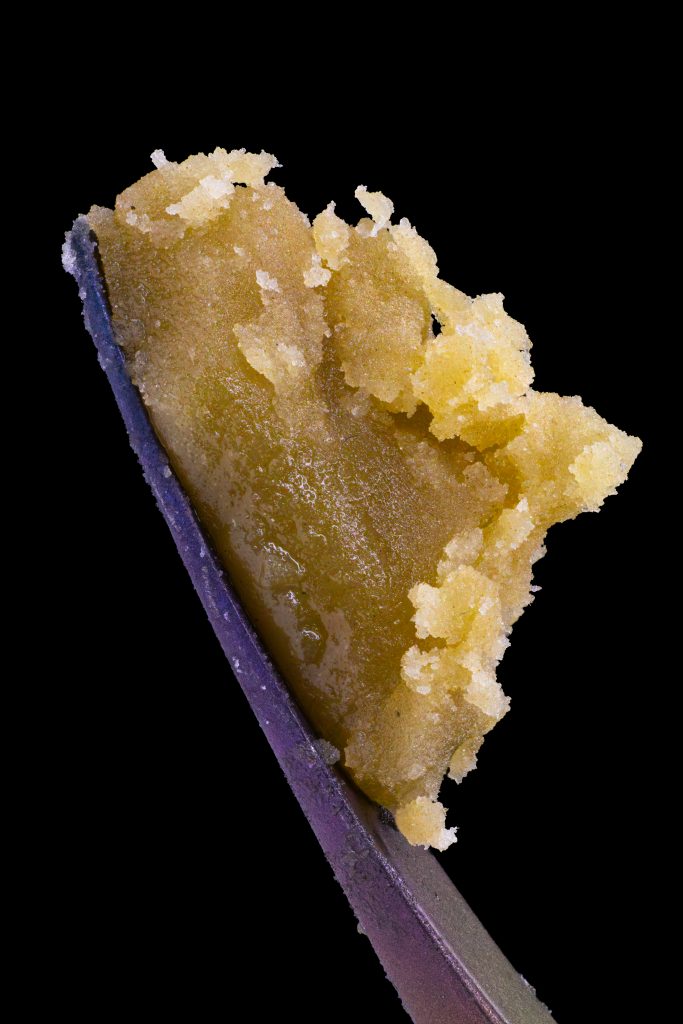
The Rarest Grade of Solventless Hash Comes to Missouri

Among serious hashmakers and solventless producers, piatella carries long-established credibility as the highest achievable functional grade of hash. Piatella is hash in its most original form, elevated to a level of purity and terpene concentration that allows it to be dabbed directly.

While piatella originated in Barcelona, early California cultivators and manufacturers were pioneers of piatella in the United States. Cannabis industry veterans like Uncle’s Farms and Kalya Extracts were among the first to produce and refine the elite solventless hash for American consumers.

Missouri-based Borealis Cannabis recently created its own piatella, Super Boof, making it the first company in the state to produce and sell it in the state. SHANGRI-LA_PIATELLA_photo by paolla tello

Dr. Kepal Patel, President of Borealis Cannabis, wanted to bring piatella to the place where his company got its start. “We wanted to bring something truly unique to our home state of Missouri. It’s not just a new product, but the introduction of an entirely new benchmark for solventless concentrates in the state.”


Producing Piatella Perfection

For hash to qualify as piatella, it must melt cleanly and completely, leaving little to no residue. It’s a simple metric with a very high bar.

Meeting that bar starts in the cultivation room. Only specific strains produce trichomes with the right size, structure, and chemical profile to survive intact through every stage of refinement.
The Borealis process starts with Super Boof, a cultivar chosen specifically because it consistently produces resin that can survive this entire process without compromise: high terpene concentration, appropriately sized gland heads, and a melt profile that holds up at every stage.

Even with the right genetics and ideal growing conditions, only a fraction of harvested material ever qualifies. This is a concentrate that begins with the selection of strain, phenotype, and individual harvest.

After ice-water extraction, Borealis applies static tech cleaning, which is a refinement step that uses electrostatic principles to draw microscopic plant contaminants away from intact gland heads. It’s a meticulous, invisible process. You won’t see the difference with the naked eye, but you’ll taste it.

The cleaned hash then undergoes a careful aging process where reduced oxygen and pressure stabilize the resin and allow volatile terpenes to settle naturally without heat, pressing, or chemical assistance. The goal is structural and aromatic preservation, keeping the resin as close as possible to its living state.

Piatella Is a Rediscovery of the Past

The Borealis team’s piatella philosophy runs deeper than the process. Aaron Lyons of Stellar Solventless, who developed piatella for Borealis, frames it as a return to something ancient.

“The future is in the past. We’re circling back to the way hash was consumed 2,000 years ago. Aged hash is the truest form of the plant. It’s a direct representation that captures its essence,” said Lyons.

It’s a perspective that reframes piatella not as a modern innovation, but as a rediscovery. Before extraction technology existed, hash was the concentrate carefully collected, patiently aged, and consumed as close to its natural state as possible. What Borealis and Lyons are doing is bringing that tradition into a licensed, standardized market.
Most cannabis products are produced on a rush-to-market model, designed to harvest, process, and sell as quickly as possible. Piatella requires a longer lead time and, above all, patience.

Borealis piatella producer Israel Doba explained, “What we’re doing is closer to what winemakers and whiskey distillers have always understood: time is a critical ingredient. We’re aging 10,000 to 15,000 grams of hash in controlled environments while most of the industry is racing to the shelf. And the yield reflects that commitment: you might give up 40 to 50% of a harvest to pursue this. 100 plants might produce 1,000 grams. That’s not a business model most operators are willing to accept, but it’s the only way to do it right.”

About the Author

Peter Barden is a communications expert who works to promote cannabis growers, manufacturers, and retailers nationwide.

Subscribe to Fat Nugs Magazine!

Love this article? Show your support for Fat Nugs with a magazine subscription!

As a fully independent media organization, Fat Nugs relies on the grassroots support of individuals like you to continue to write and share these articles. Every subscription helps us keep bringing you the unbiased, broad-ranging cannabis, hemp, and psychedelics articles like these.

Search for Articles